
Blog
Notes from the table.
Writing from the team behind RoboSoccer — how the game plays, what two years of engineering taught us, why soccer's American moment matters now, and the three clear ways to partner with us.
Recent
The newest writing — across every topic
 The Game
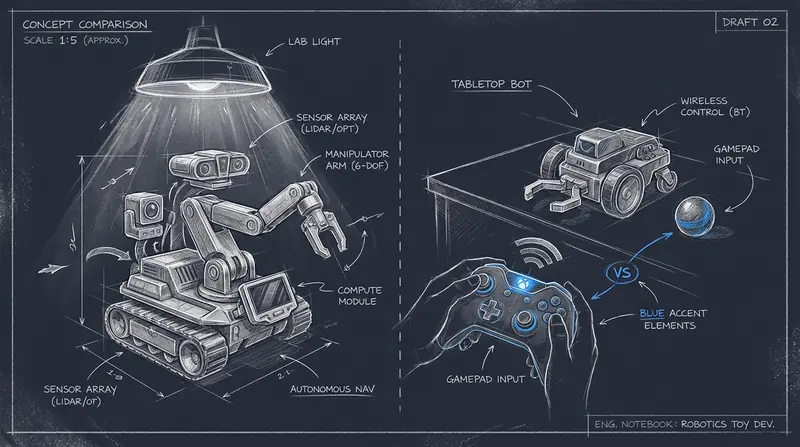
What Is RoboCup - and How Is It Different From a Robot Soccer Game?
RoboSoccer is a consumer table soccer game you control by hand. RoboCup is an unrelated autonomous robot-soccer research competition founded in 1996. They share a name but almost nothing else — and yes, kids can play robot soccer at home, from remote-control toys and coding kits to a RoboCupJunior team.
 Buyers' Guide
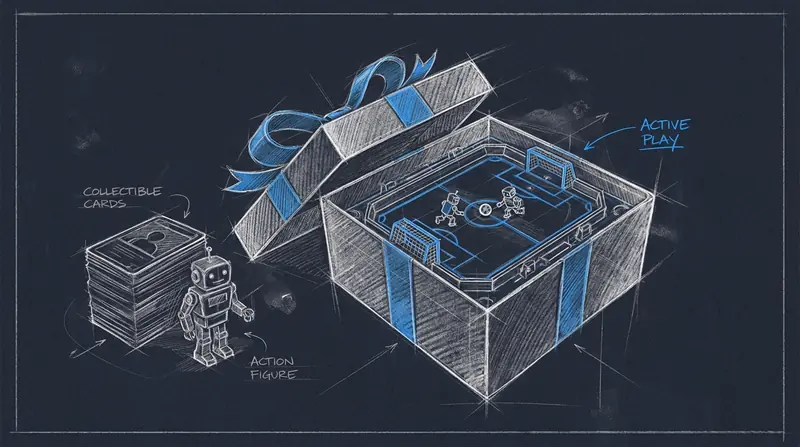
Soccer Gifts for Kids 2026: A Holiday Guide by Age (6 to 12)
A holiday 2026 guide to soccer gifts for kids ages 6 to 12, sorted by age: goals and soft balls, solo trainers, tabletop and robot soccer games, books and a video game. Each pick is sold in the US, priced as seen in late September 2026, plus when to buy before Black Friday on November 27.
 Buyers' Guide
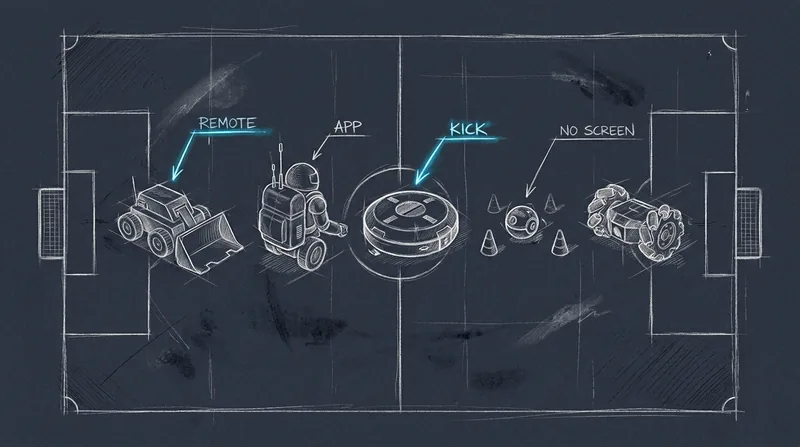
Robot Soccer Games for Kids in 2026: Every Kind Compared
RoboSoccer is table soccer with real robot players. Beyond it, here is what US families can actually buy in 2026, compared side by side: HEXBUG's arena, two-robot RC sets from MukikiM and Sharper Image, the Smart Ball Soccer Bot and Sphero Mini Soccer, plus build-and-code robots, with ages, controls, box contents and prices checked in September 2026.
Why Now
Soccer's American moment, and why the table version matters this year.
The Game
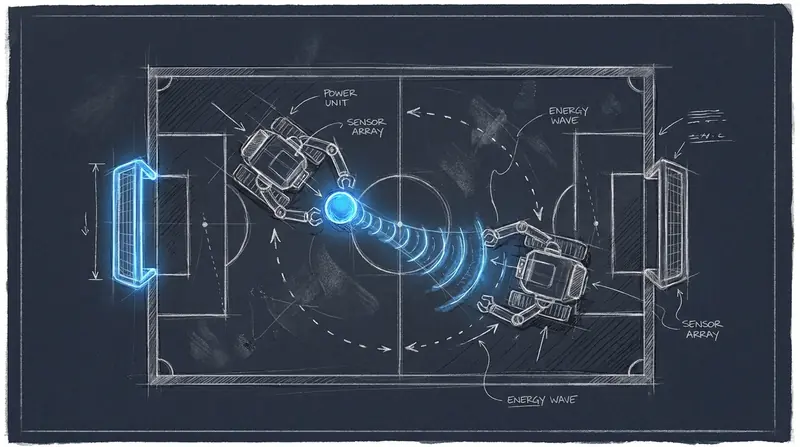
How RoboSoccer actually plays — robots, ball, arena, app.
 The Game
What Is RoboCup - and How Is It Different From a Robot Soccer Game?
RoboSoccer is a consumer table soccer game you control by hand. RoboCup is an unrelated autonomous robot-soccer research competition founded in 1996. They share a name but almost nothing else — and yes, kids can play robot soccer at home, from remote-control toys and coding kits to a RoboCupJunior team.
 The Game
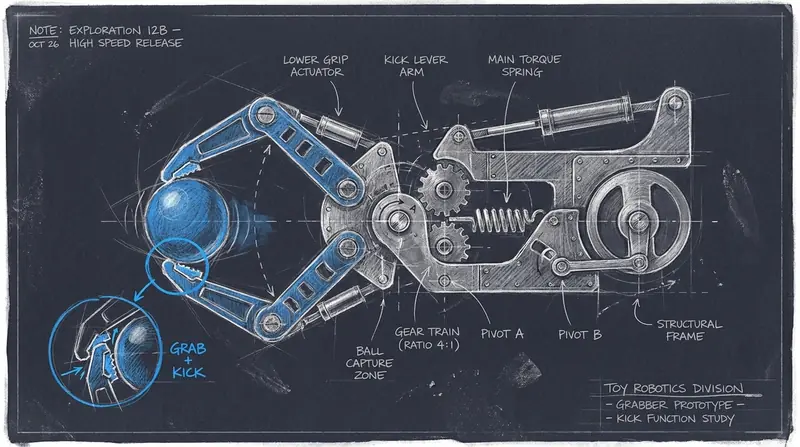
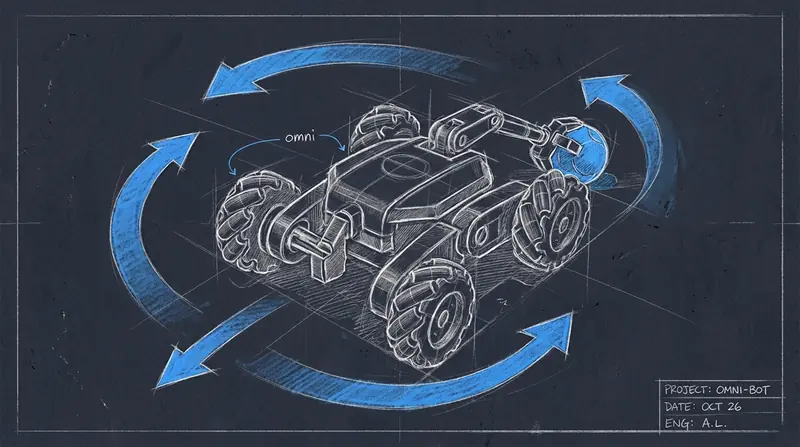
Inside the grab-and-kick: how RoboSoccer's robots actually play
No rods, no screen. Two robots drive in any direction, grab the ball, and fire it flat or lob it over a defender. Here's how the pieces fit into a real sport you can hold.
 The Game
How Do Robot Soccer Games Work? A Consumer's Guide
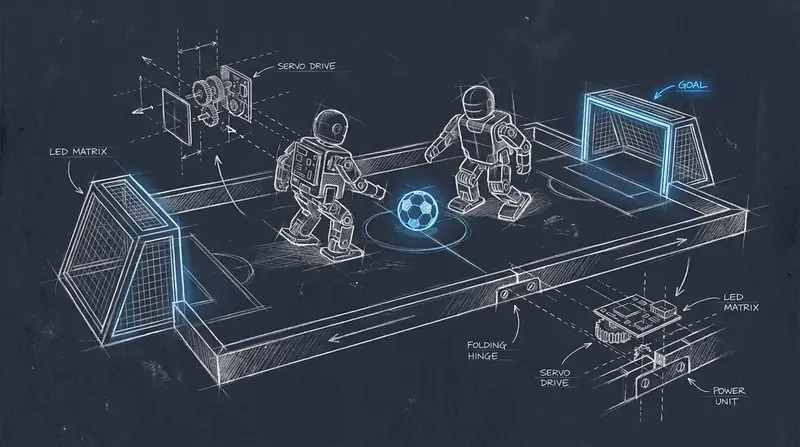
Robot soccer games like RoboSoccer let you pilot two real robots that drive in any direction, grab the ball, and shoot or lob it. Here is how the controls, scoring, and arena work.
Buyers' Guide
Comparisons and gift guides for robot soccer and STEM play.
 Buyers' Guide
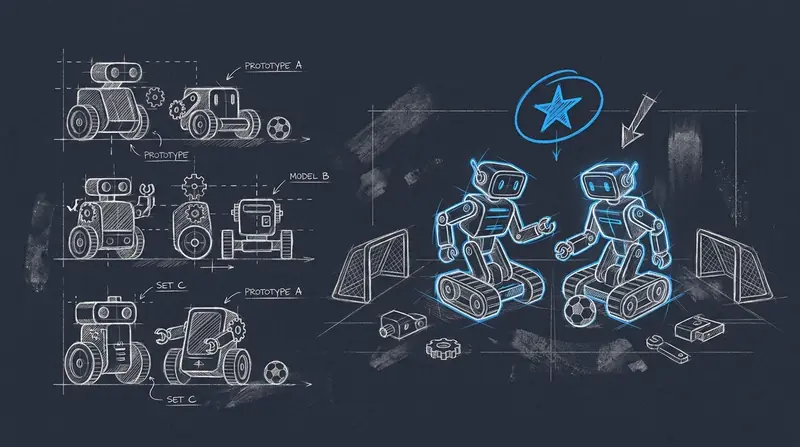
Soccer Gifts for Kids 2026: A Holiday Guide by Age (6 to 12)
A holiday 2026 guide to soccer gifts for kids ages 6 to 12, sorted by age: goals and soft balls, solo trainers, tabletop and robot soccer games, books and a video game. Each pick is sold in the US, priced as seen in late September 2026, plus when to buy before Black Friday on November 27.
Buyers' GuideRobot Soccer Games for Kids in 2026: Every Kind Compared
RoboSoccer is table soccer with real robot players. Beyond it, here is what US families can actually buy in 2026, compared side by side: HEXBUG's arena, two-robot RC sets from MukikiM and Sharper Image, the Smart Ball Soccer Bot and Sphero Mini Soccer, plus build-and-code robots, with ages, controls, box contents and prices checked in September 2026.
 Buyers' Guide
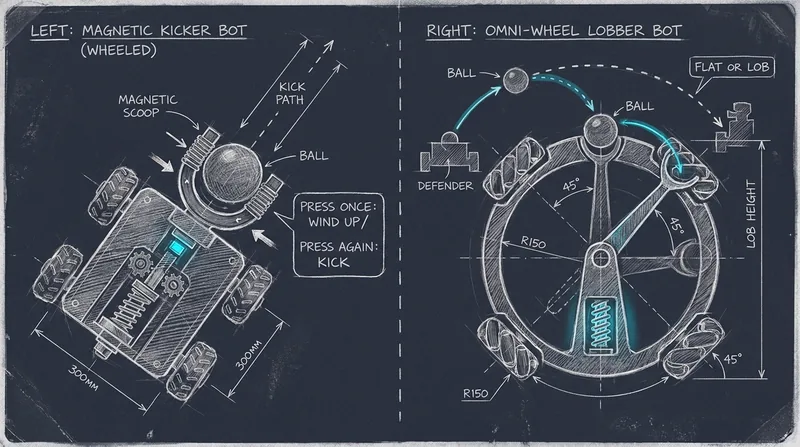
HEXBUG Robotic Soccer Arena vs RoboSoccer: An Honest Head-to-Head
RoboSoccer is table soccer with real robot players: two omni-wheel robots, driven by app or gamepad, that grab the ball and shoot it flat or lob it. The HEXBUG Robotic Soccer Arena is a remote-control soccer set sold today for about $70 at hexbug.com in September 2026. Here is how the two compare on movement, ball control, setup, power and who each one suits.
 Buyers' Guide
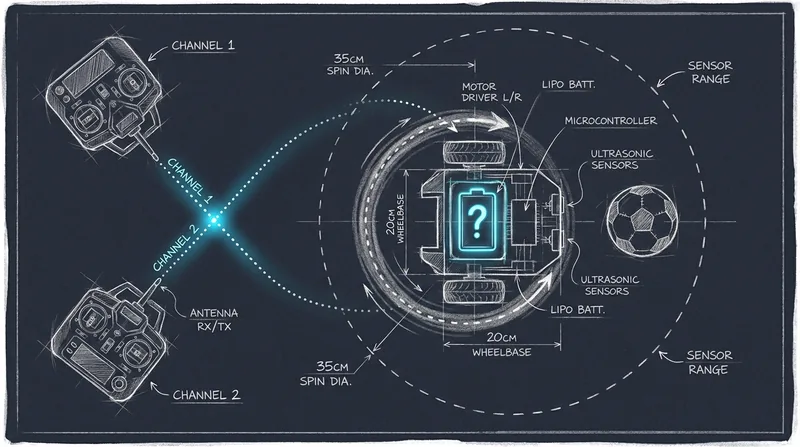
Why a Soccer Bot Spins in Circles or Won't Find the Ball: A Fix Guide
A soccer robot that spins in place, hunts in circles, or ignores the ball usually has one of five problems: the ball left sensor range, the surface doesn't match its mode, a battery is weak, two remotes crossed signals, or the app needs a reset. A troubleshooting table and fixes for RC and app-controlled soccer bots.
 Buyers' Guide
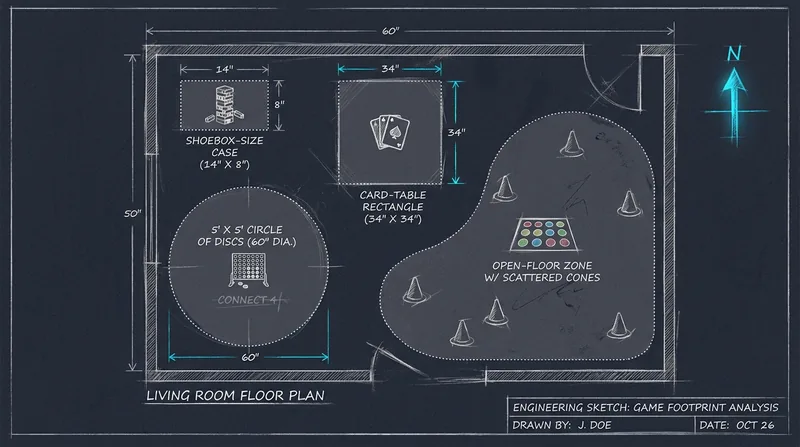
Indoor Soccer Games and Foosball Alternatives for Kids
RoboSoccer is table soccer with real robot players. Beyond it, here are the real indoor soccer games for kids, sorted by how much space they need: pocket-size tabletop foosball, small goal-and-ball sets for a living room, and remote-control or app-driven soccer robots. Ages, footprint and September 2026 prices from the maker or a major retailer, from about $22 to $70.
 Buyers' Guide
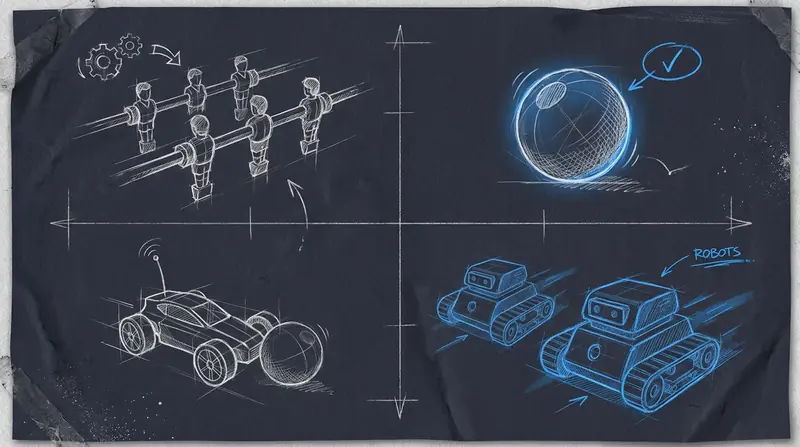
RoboSoccer vs Foosball vs Sphero vs RC Soccer Bots: An Honest Comparison
RoboSoccer fields two app-controlled robot players on a folding arena, foosball uses figures on fixed rods, Sphero is a programmable ball, and RC soccer bots are single remote-control toys. Here is how they really compare.
 Buyers' Guide
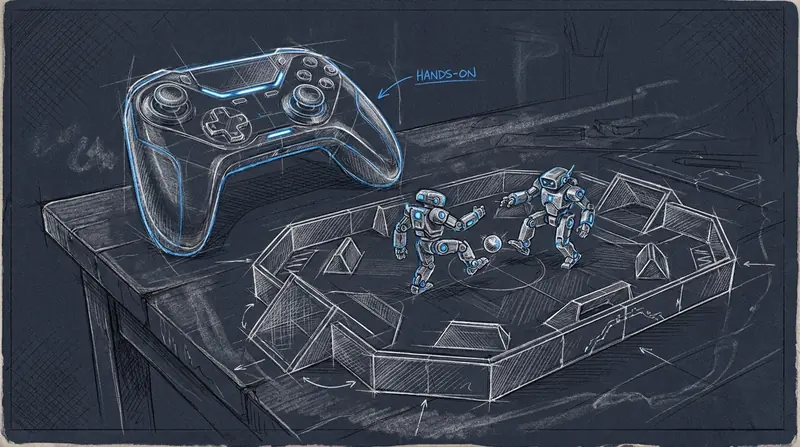
Screen-Free Robot Play: Why Parents Are Choosing Physical STEM Toys in 2026
Most parents say their kids could use a tech detox, and many are steering them toward offline hobbies. A robotic game played with your hands, like RoboSoccer, teaches technology without becoming more screen time.
Licensing & Partnership
The three ways to partner with us, and the thinking behind each.
 Licensing & Partnership
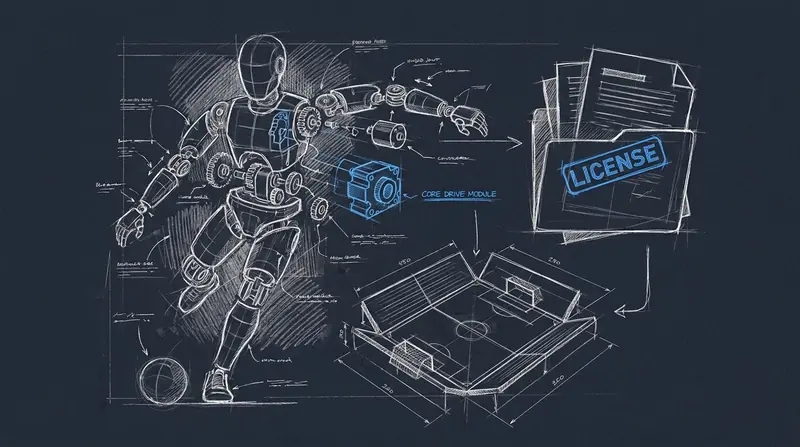
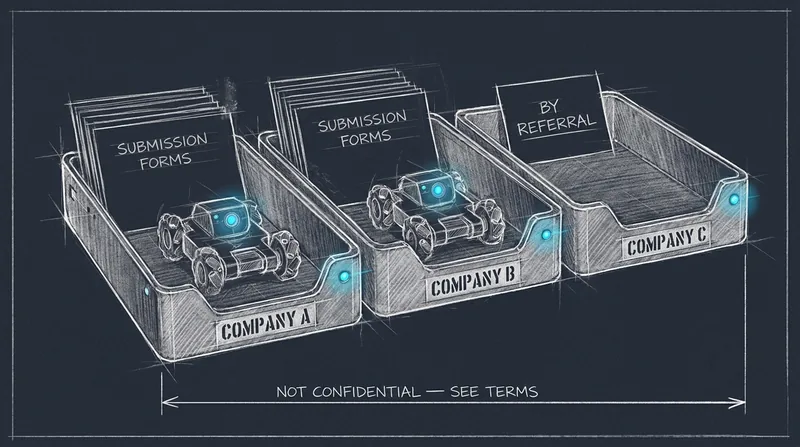
How Hasbro, Mattel and Spin Master Take Outside Toy Ideas (2026)
Hasbro and Mattel each run an open web portal where anyone 18 or older can submit a toy idea directly. Spin Master does not. Here is what each company accepts, who may submit, what "not confidential" means in practice, and the royalty terms each one states — checked at the source in September 2026.
 Licensing & Partnership
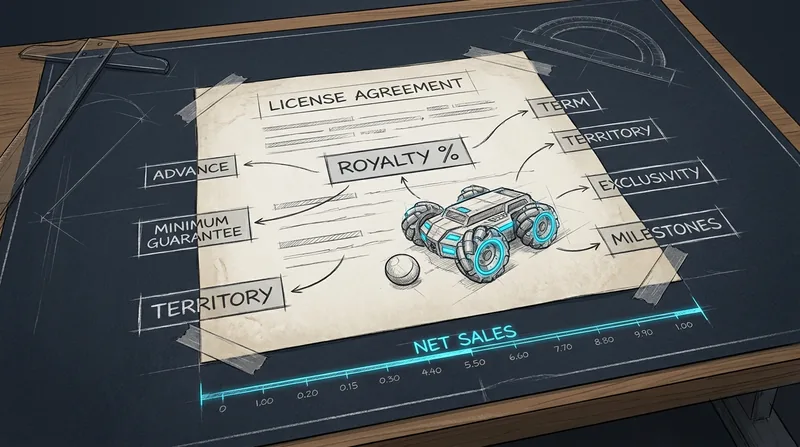
Toy Licensing Royalty Rates and Deal Terms, Explained
Toy royalties are paid on the licensee's net sales, not the shelf price. Inventors who license a toy concept usually get 3 to 5 percent; character and brand licenses run higher, from 1 to 22 percent at one public toy maker. Here is how advances, minimum guarantees, term, territory, exclusivity and milestones shape the deal.
 Licensing & Partnership
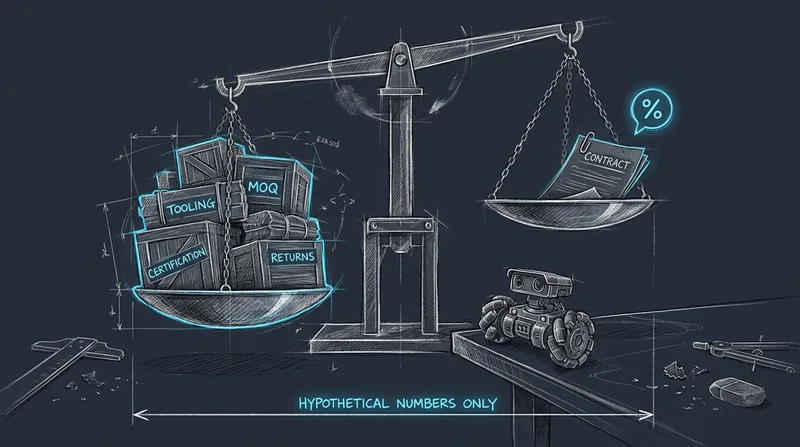
License or Manufacture? The Cost Math of a Robotics Toy
Manufacturing a robotics toy yourself means paying for tooling, a minimum order quantity, safety and radio certification, and holiday-season returns risk before the first sale. Licensing trades a share of revenue — publicly reported rates run from about 3% to the high teens of net sales — for someone else to carry that risk. Here is the public cost math, with a hypothetical worked example.
 Licensing & Partnership
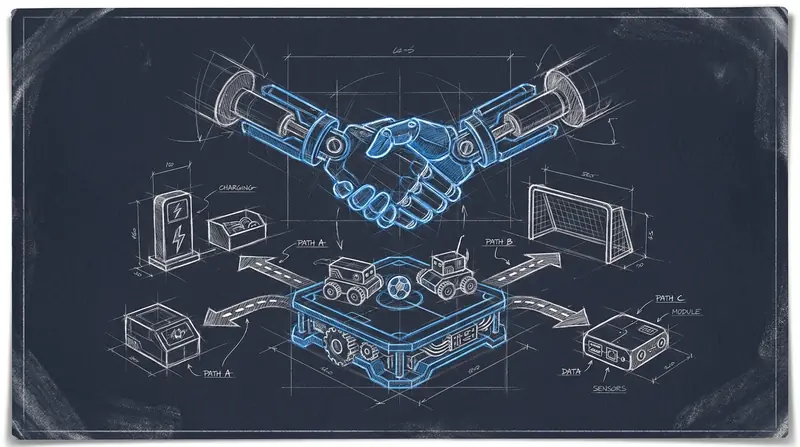
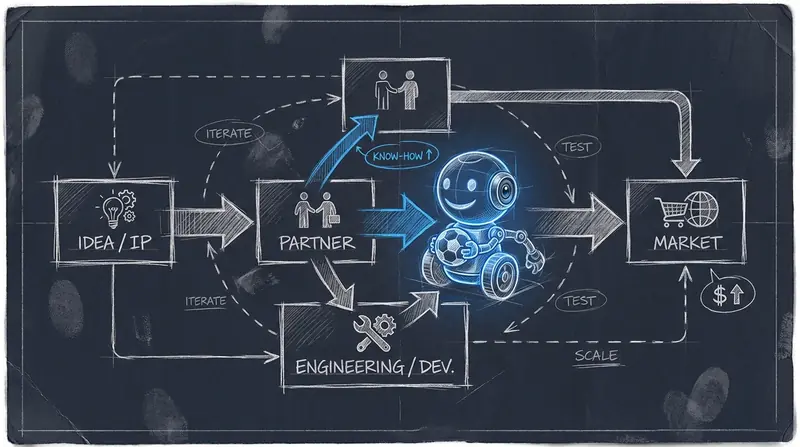
Why we license RoboSoccer instead of manufacturing it
We built the robot soccer game. We're not the right team to mass-manufacture and retail it in America — so we partner, openly and non-exclusively, three clear ways. Here's the thinking.
 Licensing & Partnership
How to License a Hardware Product to a US Partner: A Practical Guide (With a Real Example)
Licensing a hardware product to a US partner means handing over the proven design and know-how so they can manufacture and sell — without you building a factory. Here is the process, with RoboSoccer as a worked example.
 Licensing & Partnership
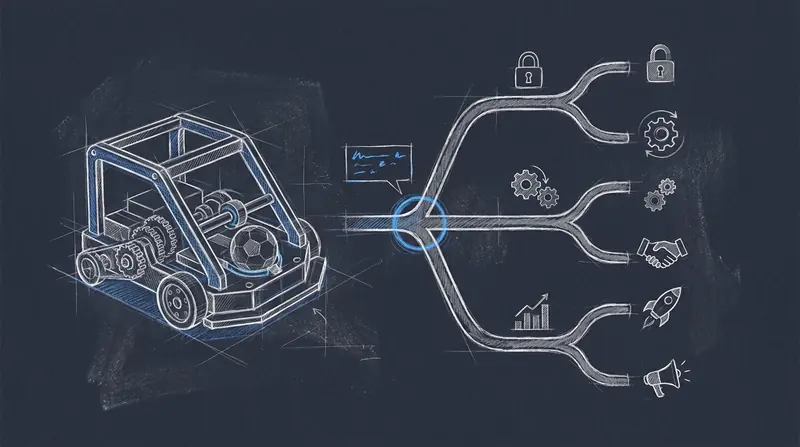
Co-Develop, License, or White-Label: 3 Ways to Bring a Robot Soccer Platform to Market
There are three open, non-exclusive ways to bring RoboSoccer to market: license the technology and build your own, co-develop and launch with the original team, or white-label and grow the platform under your brand.