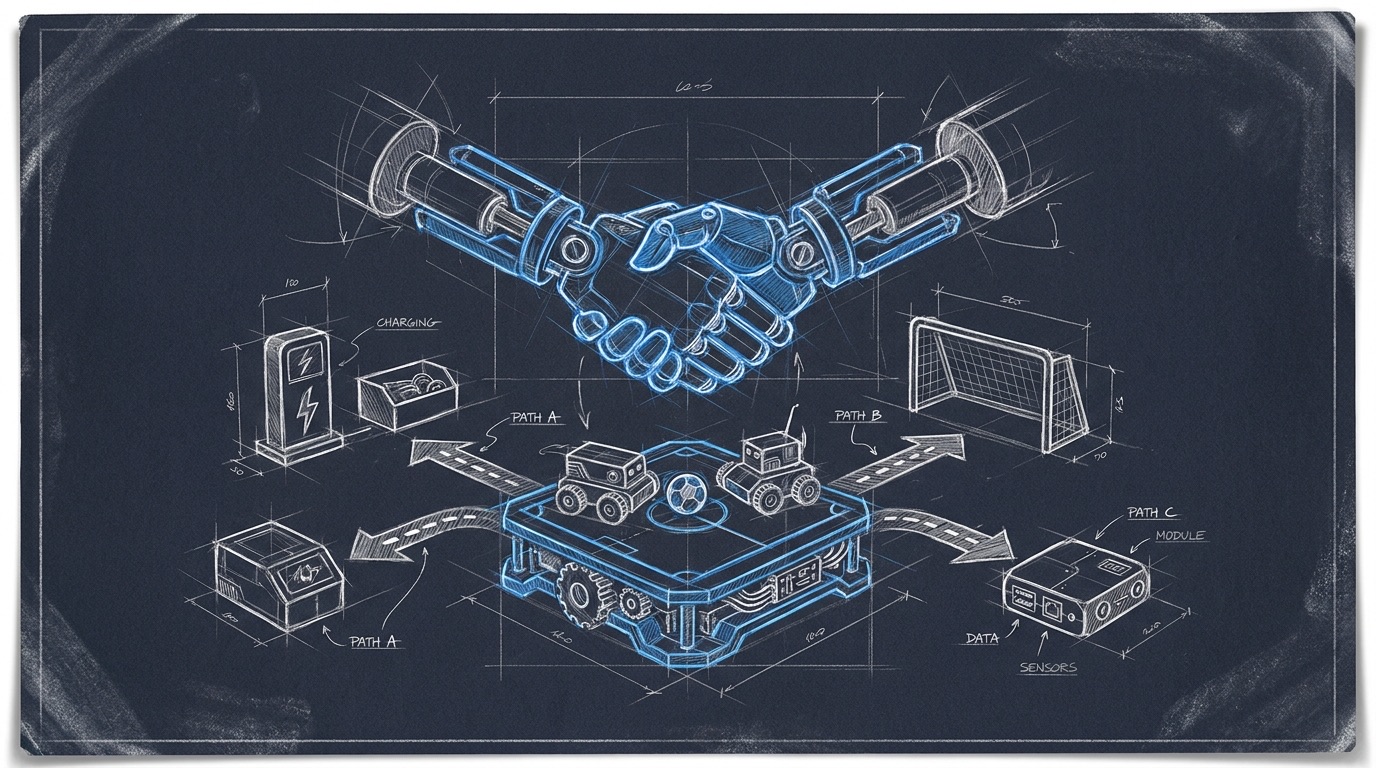
Yes — there is a finished robotics toy available to license to a US partner. It is RoboSoccer: the first table soccer game with real robot players, a proprietary and fully working platform built over 2+ years of engineering. The IP is clean and unencumbered, and partnerships are open and non-exclusive.
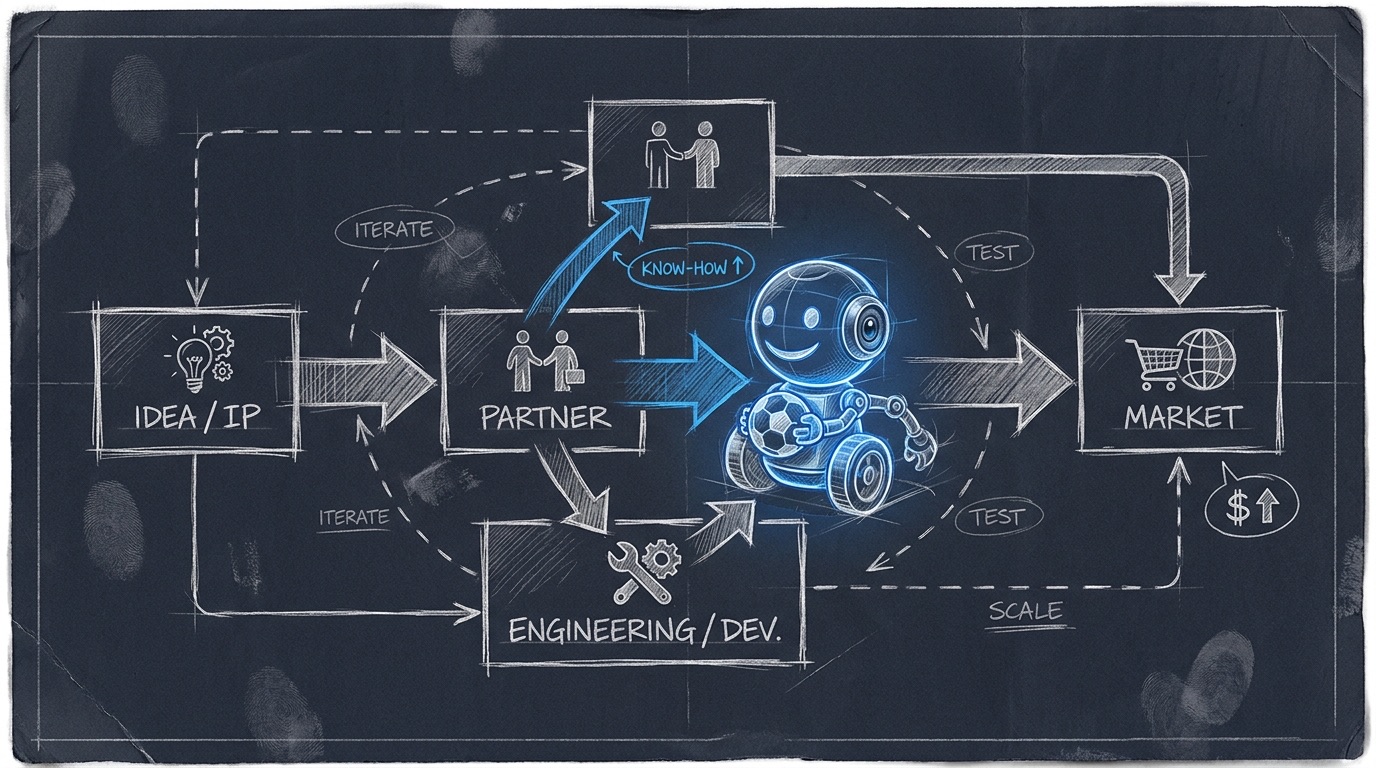
If you are a US toy company, robotics brand, or hardware operator searching for a proven robotics product to put your name on, this page is the direct answer. You do not have to invent a category, burn two years on R&D, or gamble on whether real kids will actually play with it. That work is done. What remains is the work to do with a partner: manufacturing at volume, US certification, and going to market.
What exactly is available to license
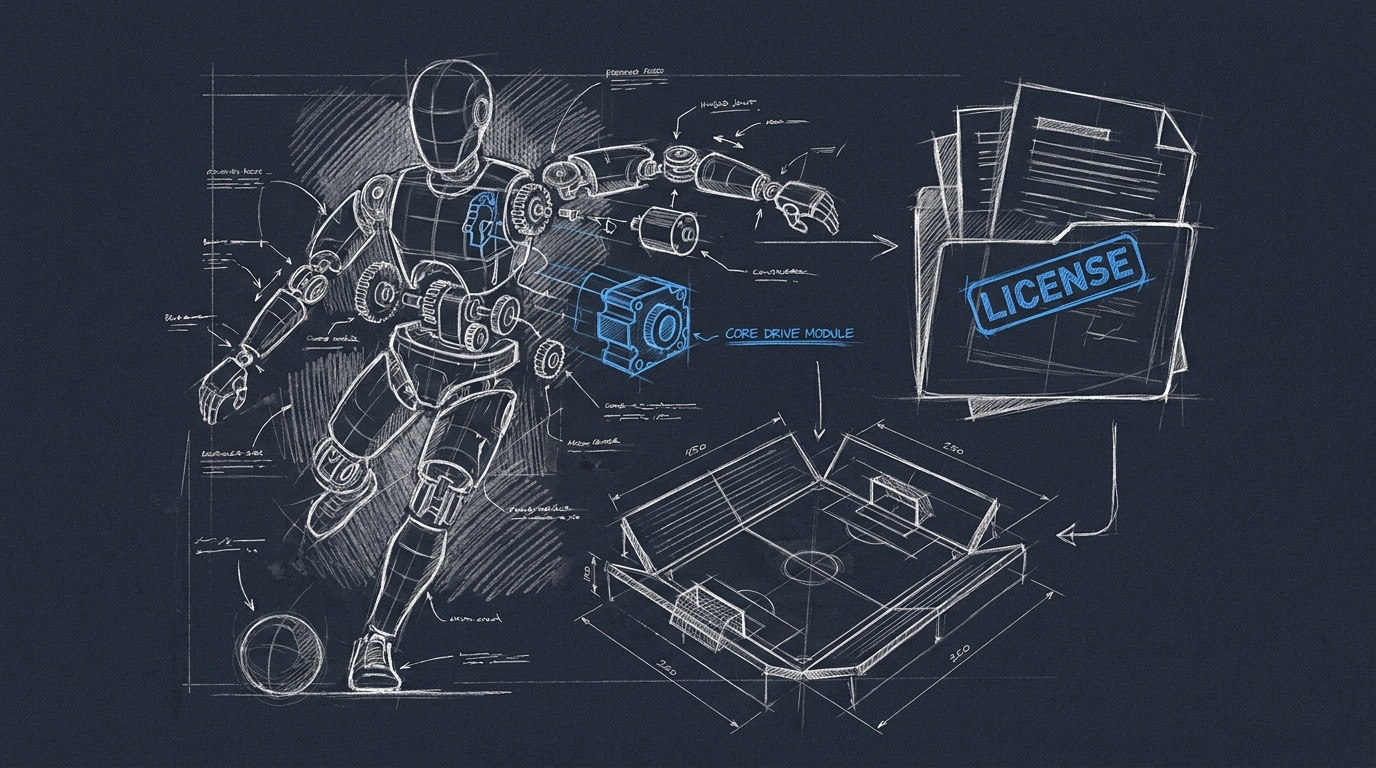
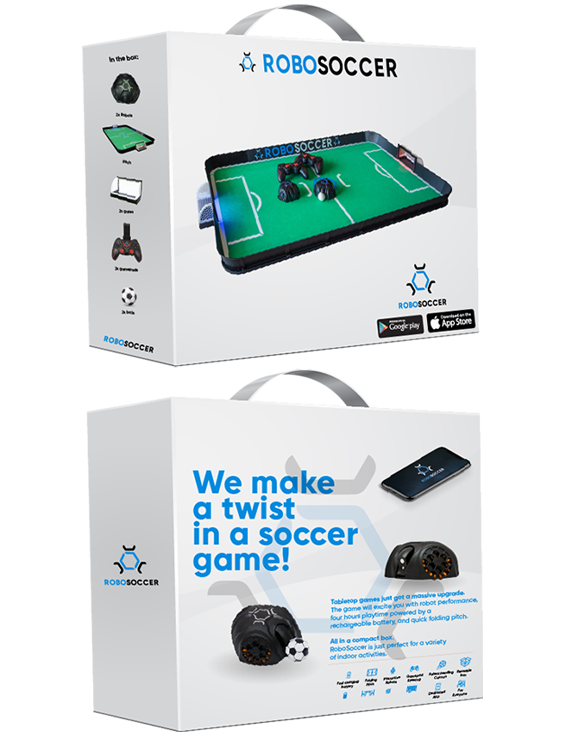
RoboSoccer is not a concept deck or a prototype that only works in a lab. It is a finished, filmed, play-validated product. The licensable asset is the complete package of designs, firmware, software, and know-how — not a patent.
- Two omni-wheel robot players with a proprietary grab-and-kick mechanism
- The full hardware design — mechanical, electronic, and the drive system
- Production-ready firmware for the robots and arena
- A built, working companion app for iOS and Android, plus gamepad control
- An arena that folds into a box and LED goals that flash when you score
- The brand, the gameplay footage with real kids, and the accumulated know-how from 2+ years of R&D
The three ways to partner
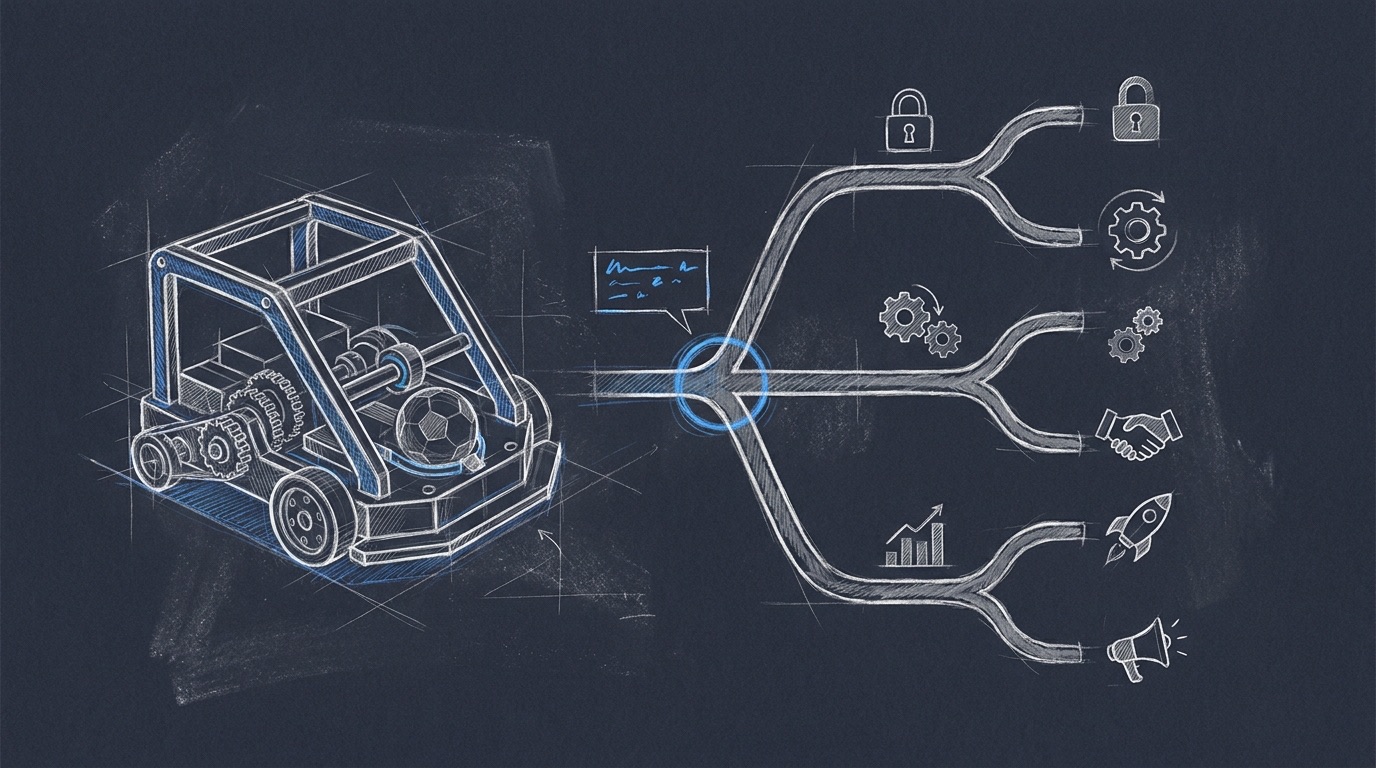
There is no single path and no single exclusive partner. Three open, non-exclusive models let you engage at the level that fits your business. For the full framework, see three ways to bring a robot soccer platform to market.
1. License the Technology
Take the proven, unencumbered IP — the drive system, the grab-and-kick mechanism, the app, and the full hardware design — and build your own US products on it.
2. Co-Develop & Launch
Finish the last mile together: manufacturing-ready, costed for volume, and US-certified. The original team stays in through launch.
3. Brand & Grow the Platform
Put your brand on it and grow a line — new teams, new modes, and other tabletop sports — on the same architecture.
Why partner instead of build from scratch
Building a robotics toy from zero means years of mechanical iteration, firmware, app development, and play-testing before you know whether children will engage. RoboSoccer skips that. The hard, uncertain part — does the product actually work and do kids love it — is already answered on film. For a step-by-step view of how this works, read how to license a hardware product to a US partner.
The market context
RoboSoccer sits at the intersection of three growing categories: educational robots, STEM toys, and soccer-themed products.
| Category | Size & trajectory |
|---|---|
| Educational robots | $1.4B (2022) → $3.2B (2027), 17.3% CAGR |
| STEM toys | $21.65B (2025) → $34.75B (2031), 8.2% CAGR |
| US toy industry | Returned to growth, +6% in 2025 |
| Soccer-themed toys | +160% globally through April 2026 — now 9% of the sports-toy category |
The timing is notable: the soccer-toy surge coincides with the 2026 World Cup coming to North America. To understand that tailwind, see what RoboSoccer is.
Who this is for
US toy manufacturers, robotics and STEM-education brands, consumer-electronics companies, and licensing-savvy operators looking for a finished, de-risked product to launch under their own brand — without the multi-year R&D bill.
If that is you, the next step is simple. Start a conversation and we will open the data room.
Key facts
Educational robots market: $1.4B (2022) → $3.2B (2027), 17.3% CAGR.
Source · https://www.marketsandmarkets.com/Market-Reports/educational-robot-market-28174634.html
STEM toys market: $21.65B (2025) → $34.75B (2031), 8.2% CAGR.
Source · https://www.mordorintelligence.com/industry-reports/stem-toys-market
The US toy industry returned to growth, up 6% in 2025.
Source · https://www.globenewswire.com/news-release/2026/02/03/3231420/0/en/u-s-toy-industry-returns-to-growth-in-2025-circana-reports.html
Soccer-toy sales rose +160% globally through April 2026, now 9% of the sports-toy category.
Source · https://www.circana.com/post/soccer-fever-fuels-global-surge-in-toys-and-collectibles-circana-reports
FAQ
- Is there really a robot soccer product available to license to a US partner?
- Yes. RoboSoccer is a finished, working robot soccer platform — two omni-wheel robots, a proprietary grab-and-kick mechanism, a companion app, and a fold-into-a-box arena — available to license to US partners on open, non-exclusive terms.
- Is RoboSoccer patented?
- No. There is no patent. The licensable asset is the finished, working product: the proprietary hardware design, firmware, the built iOS/Android app, the brand, the gameplay footage, and the know-how from 2+ years of R&D. The IP is clean and unencumbered.
- Is the IP exclusive to one partner?
- No. Partnerships are open and non-exclusive — across products, price tiers, and channels. You do not have to wait on a single exclusive deal to move forward.
- Has RoboSoccer proven it sells at scale?
- No, and we are honest about that. RoboSoccer has proven PLAY, validated on film with real kids. Proving sales at scale — volume manufacturing, US certification, distribution, and marketing — is the work to do together with a partner.
Want to build it in America?
Three clear ways to partner with us.
License the technology, co-develop and launch, or brand and grow the platform. Tell us about your company and we'll set up a short call.
Start a conversation