RoboSoccer is a consumer table soccer game where two people pilot real robots by hand for fun. RoboCup is the opposite end of the spectrum: an international robot-soccer research competition, founded in 1996 by a group of university researchers including Hiroaki Kitano (its first competition was held in 1997 in Nagoya, Japan), whose stated goal is for a team of autonomous robots to beat the human World Cup champions by 2050. Both use the word "soccer," both involve robots, and that's largely where the resemblance ends — including on the question parents actually ask, which is whether a kid can play something like this at home. The short answer is yes, in three different ways, covered below.
RoboSoccer is not affiliated with RoboCup — people researching one keep landing on pages about the other, which is why this page draws the line between them.
What RoboCup is
RoboCup is a serious research initiative, and it deserves an accurate description. It brings universities and labs together to advance robotics and AI through the shared challenge of soccer. The robots play autonomously: they sense the field, decide, and act with no human steering them during a match. The headline ambition, beating the human champions by 2050, is a long-horizon benchmark for the whole field.
- Purpose: advance robotics and AI research.
- Founded: 1996, by a group of university researchers including Hiroaki Kitano; the first RoboCup competition was held in 1997 in Nagoya, Japan.
- Control: fully autonomous — no human drives the robots in play.
- Where you see it: university labs and international research competitions.
What a robot soccer game is
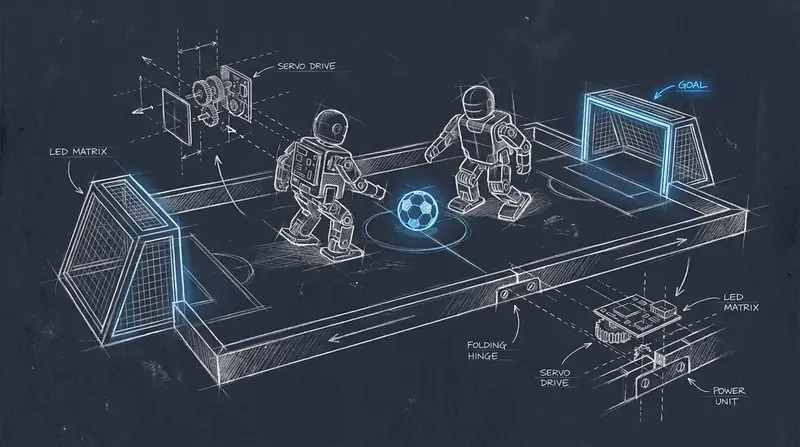
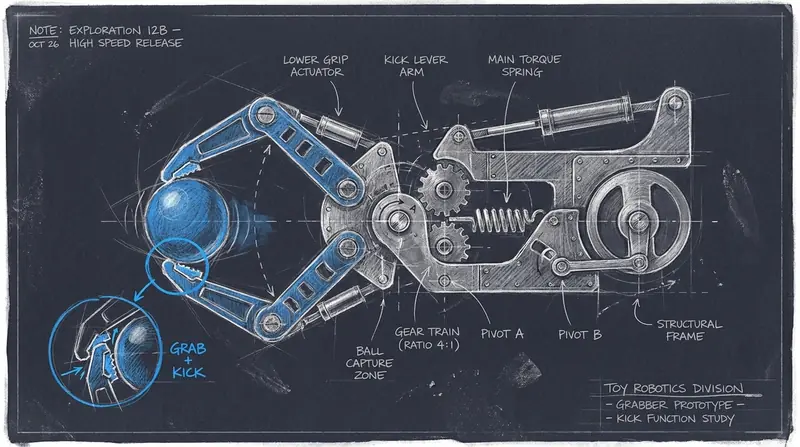
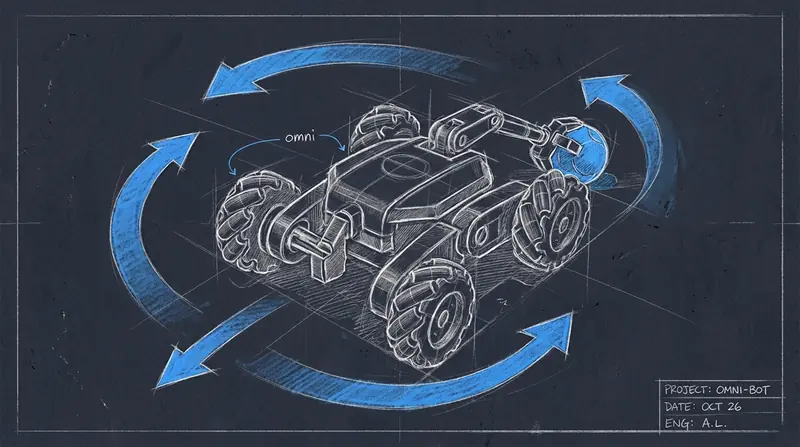
RoboSoccer is a consumer game. Two people each pilot a robot that drives on omni wheels and uses a grab-and-kick mechanism to shoot flat or lob the ball, with LED goals that flash when you score. The fun comes from you making the moves, not from watching robots think. For the full breakdown, see how do robot soccer games work.
Side by side
| Dimension | RoboSoccer | RoboCup |
|---|---|---|
| Purpose | Consumer entertainment | Robotics and AI research |
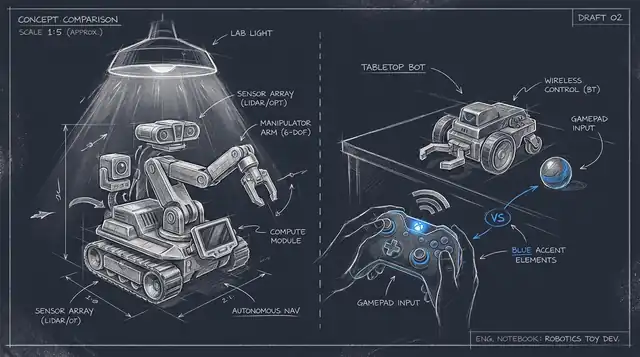
| Who controls the robots | You do, via app or gamepad | No one — they are autonomous |
| Autonomy | Human-piloted, real-time | Fully autonomous during play |
| Audience | Families, kids, hobbyists | Researchers, students, engineers |
| Where you encounter it | At home, on a folding arena | University labs, research competitions |
| Founded / origin | Deep-tech robotics team, 2+ years of engineering | 1996, Hiroaki Kitano and colleagues (first event 1997) |
Why the confusion? Both involve robots and a ball, and both borrow the word "soccer." But one is a research benchmark for machine autonomy and the other is a game you play with your hands. Knowing which you are looking at saves a lot of mismatched expectations — and, as it turns out, there's a real middle ground between the two, which is what the rest of this page is about.
Can kids play robot soccer at home?
Yes, and there are three genuinely different ways to do it, depending on whether your kid wants to drive a robot tonight, learn to code one, or work toward the real research competition.
Toys: play soccer with a robot tonight
If your child just wants to steer a soccer robot with no lab required, several two-robot remote-control sets and one app-driven robot ball are sold in the US right now: the HEXBUG Robotic Soccer Arena (about $70, ages 8+), MukikiM's BOT SoccerBot (about $60, ages 6+), and Sphero Mini Soccer (about $50, ages 8+), among others. None of these are autonomous — a kid drives every move, which is the opposite of what RoboCup measures, but it's the fastest way to get a robot soccer match going in a living room. For the full lineup with prices, ages and what's in the box, see robot soccer games for kids in 2026; for the closest single toy to compare against RoboSoccer, see HEXBUG Robotic Soccer Arena vs RoboSoccer.
Coding kits: a taste of what RoboCup actually does
Sphero Mini Soccer is the nearest a family gets to RoboCup's autonomy without leaving the house. Past driving it by hand in the Sphero Play app, kids can program it in the Sphero Edu app — using drag-and-drop blocks or, for older kids, JavaScript or Python — which is a small, supervised taste of the sense-and-respond logic a RoboCup team writes at a much larger scale. It still isn't autonomous soccer: there's no opposing team and no field awareness, just a ball that follows code instead of a joystick. It's a reasonable next step for a kid who's outgrown driving a remote-control robot and is curious how one thinks.
Junior leagues: the real ladder into RoboCup
For a child who wants the actual research path rather than a toy version of it, RoboCupJunior is the on-ramp RoboCup itself runs for students. Its Soccer league splits into Soccer Vision and Soccer Infrared, fields two fully autonomous robots per team, and its general rules set the main age band at 14 to 19 as of July 1 of the competition year. An Entry League exists alongside it for teams new to the competition, running one robot per side rather than two, which is where a school club typically starts. In the US, RoboCupJunior USA runs the same three leagues — Soccer, Rescue and OnStage — for students up to 19 with any experience level, has a 2026 regional at the Wardlaw-Hartridge School in New Jersey on May 17, and sends winning teams on to the RoboCupJunior international event, held in Incheon, South Korea from June 30 to July 6, 2026.
This isn't something you order online and unbox — it runs through a school or hobby club, not an individual sign-up. RoboCupJunior's own guidance for a team just getting started is to contact your regional organizer directly, or ask in its Discord and forum, rather than register solo. If your child has already outgrown driving a toy and programming a Sphero, and wants to build and code a robot that plays with no one holding a controller, this is the path that leads there.
Which one are you actually looking for?
If you want to study autonomous multi-robot systems or compete academically, RoboCup is your world, and RoboCupJunior is how a student gets there. If you want two robots you can grab a controller and play with tonight, that's a robot soccer toy or RoboSoccer. If you want something in between — coding, but still a toy in the house — Sphero Mini Soccer sits in the middle. For the full definition of RoboSoccer specifically, see what is RoboSoccer.
RoboSoccer is a finished product with play validated on film, and the company licenses the technology to US partners. If that's interesting to you, start a conversation.
Key facts
RoboCup is an autonomous robot-soccer research competition founded in 1996 by a group of university professors including Hiroaki Kitano; its first competition was held in 1997 in Nagoya, Japan. Its stated goal is for a team of autonomous robots to beat the human World Cup champions by 2050.
Source · https://en.wikipedia.org/wiki/RoboCup
RoboCup's robots play autonomously — sensing, deciding, and acting without human control during a match.
Source · https://spectrum.ieee.org/robocup-robot-soccer
RoboCupJunior's general rules set Junior Student Member age at 14 to 19 years old as of July 1 of the competition year, with Soccer League teams of 4 members fielding autonomous robots in 2-robot-a-side Soccer Vision and Soccer Infrared leagues.
Source · https://robocup-junior.github.io/general-rules/main/general-rules.html
RoboCupJunior Soccer's Entry League runs one robot per team rather than two, for teams new to the competition, alongside the main leagues.
Source · https://junior.robocup.org/soccer/
RoboCupJunior USA is open to students up to 19 years old at any experience level across Soccer, Rescue and OnStage leagues; its 2026 regional is May 17 at the Wardlaw-Hartridge School in New Jersey, with the RoboCupJunior international event June 30–July 6, 2026 in Incheon, South Korea.
Source · https://www.robocupjunior.us/
Sphero Mini Soccer can be driven by hand in the Sphero Play app or programmed in the Sphero Edu app using Draw, Blocks, or text-based JavaScript/Python.
Source · https://support.sphero.com/en-US/sphero-mini-soccer-faq-244560
FAQ
- Is RoboSoccer part of RoboCup?
- No. They are unrelated. RoboCup is a research competition for autonomous robots run by universities and labs. RoboSoccer is a consumer game that humans control directly with an app or gamepad.
- What is RoboCup?
- RoboCup is an international robot-soccer research competition founded in 1996 by a group of university researchers including Hiroaki Kitano, with its first competition held in 1997 in Nagoya, Japan. Teams of autonomous robots play soccer with no human control, and the project's stated long-term goal is to beat the human World Cup champions by 2050.
- Can kids play robot soccer at home?
- Yes, in three ways: remote-control or app-driven soccer robot toys you can buy now (HEXBUG's Robotic Soccer Arena, MukikiM's BOT SoccerBot, Sphero Mini Soccer, and others), a coding kit like Sphero Mini Soccer for kids who want to program rather than just drive, or a RoboCupJunior team through a school or club for kids who want the real autonomous-robotics path.
- Are RoboSoccer's robots autonomous like RoboCup's?
- No. RoboSoccer is human-piloted in real time — you drive each robot and choose every shot. Autonomy is the defining feature of RoboCup, not of a consumer robot soccer game.
- Can I play RoboCup at home?
- Not really — RoboCup is a research competition built around custom autonomous robots in lab settings. For at-home, human-controlled robot soccer, a consumer game like RoboSoccer or a toy such as the HEXBUG Robotic Soccer Arena is the relevant product; for the closest at-home step toward RoboCup itself, RoboCupJunior runs through school and hobby clubs rather than as a retail product.
- What is RoboCupJunior, and how is it different from RoboCup?
- RoboCupJunior is RoboCup's own program for students, typically ages 14 to 19 internationally. Its Soccer league uses fully autonomous 2-robot teams like the main RoboCup competition, plus an Entry League with one robot per side for teams that are new to it. RoboCupJunior USA runs it domestically, through school and club teams rather than individual sign-up.
Want to build it in America?
Three clear ways to partner with us.
License the technology, co-develop and launch, or brand and grow the platform. Tell us about your company and we'll set up a short call.
Start a conversation