
Home
Reference
Glossary
Plain-language definitions of the terms behind RoboSoccer and robot soccer — what they mean, in one line each.
- RoboSoccer
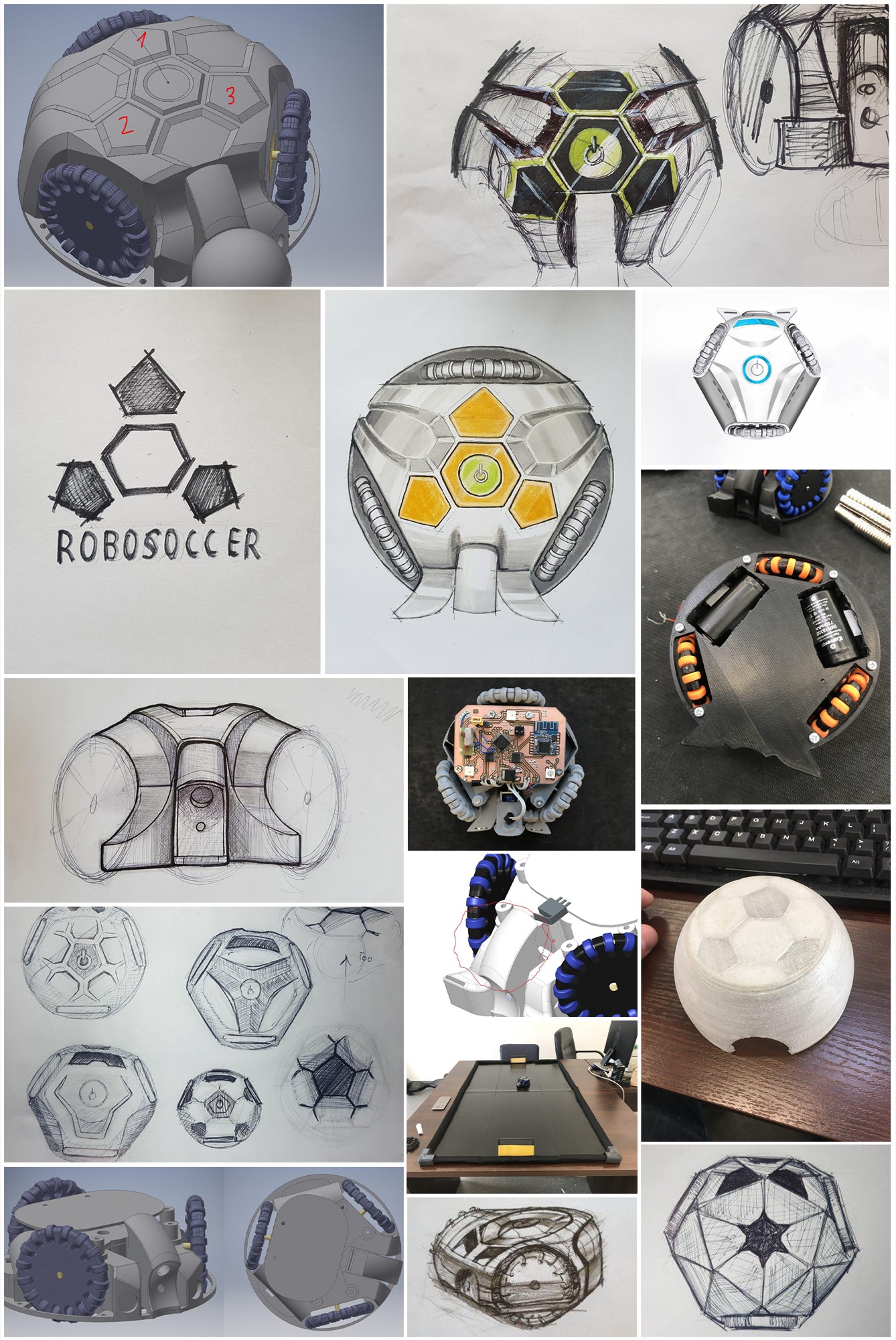
- RoboSoccer is the first table soccer game with real robot players: two omni-wheel robots controlled by a companion app or gamepad, with a proprietary grab-and-kick mechanism, an arena that folds into a box, and LED goals that flash when you score. Its technology is available to license to U.S. partners. Reference ↗
- Robot soccer
- Robot soccer is any game in which robots play soccer. In the consumer sense, two people control robot players that drive, grab, and shoot a ball on a table. In the research sense (for example RoboCup), fully autonomous robots play without human control.
- Tabletop robotics game
- A tabletop robotics game is a game played on a table where the moving pieces are robots rather than static figures on rods, combining physical play with electronic, app- or gamepad-driven control.
- Grab-and-kick mechanism
- The grab-and-kick mechanism is RoboSoccer's proprietary system that lets a robot capture the ball and then choose its shot — firing it flat across the surface or lobbing it over a defender. The two shot types are what turn the game into a real sport rather than a novelty.
- Omni wheels
- Omni wheels are wheels ringed with small rollers that let a robot move in any direction — forward, sideways, or rotating in place — without turning first. They are what make a RoboSoccer robot move like a real player shifting on the field. Reference ↗
- LED goals
- LED goals are goals fitted with lights that flash the instant the ball goes in, giving instant, unambiguous scoring feedback and making every goal land as a moment.
- Technology licensing
- Technology licensing is a business model in which the owner of a technology grants another company the right to make and sell products using its designs, firmware, and know-how — instead of manufacturing and selling the products itself. RoboSoccer licenses its technology to U.S. partners. Reference ↗
- Non-exclusive license
- A non-exclusive license lets the owner grant the same rights to more than one partner at once — across products, price tiers, and channels — so no single partner holds exclusivity. RoboSoccer partners openly and non-exclusively.