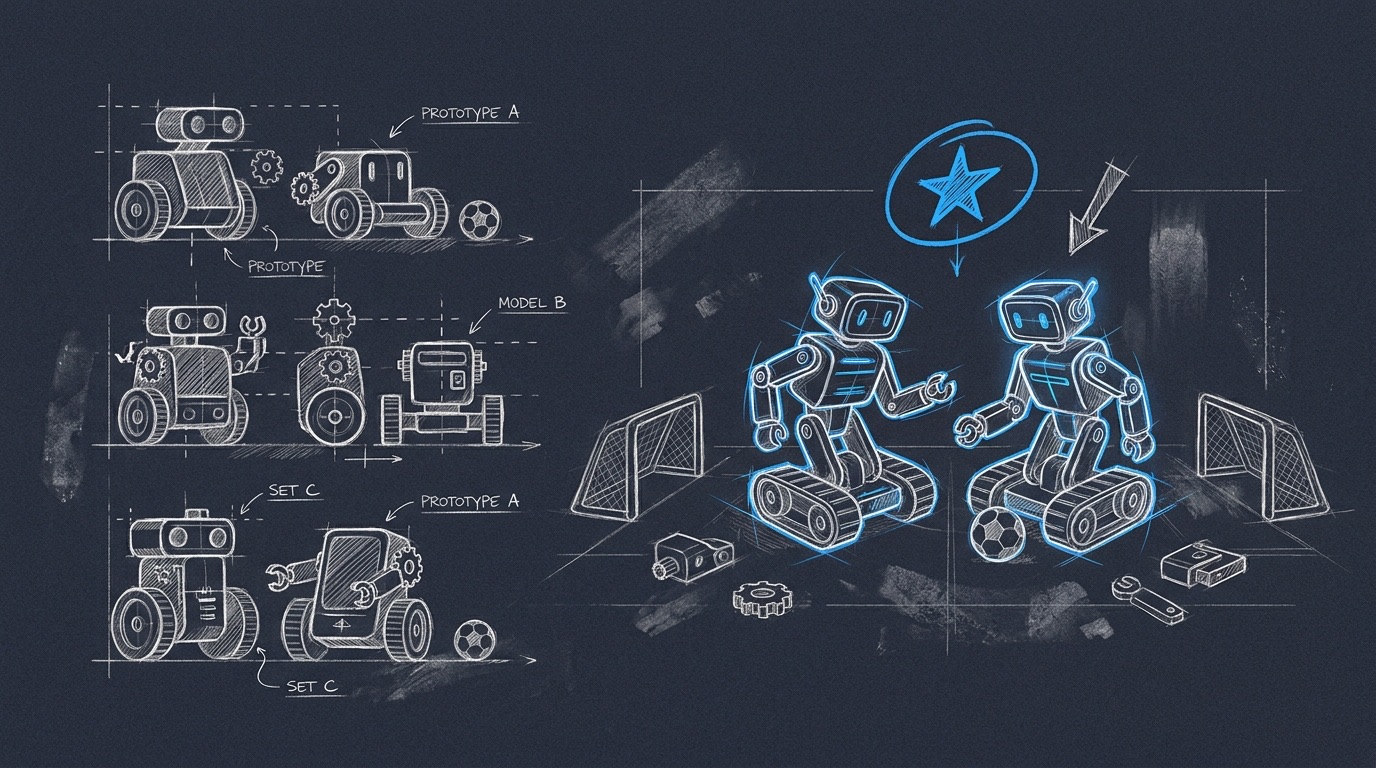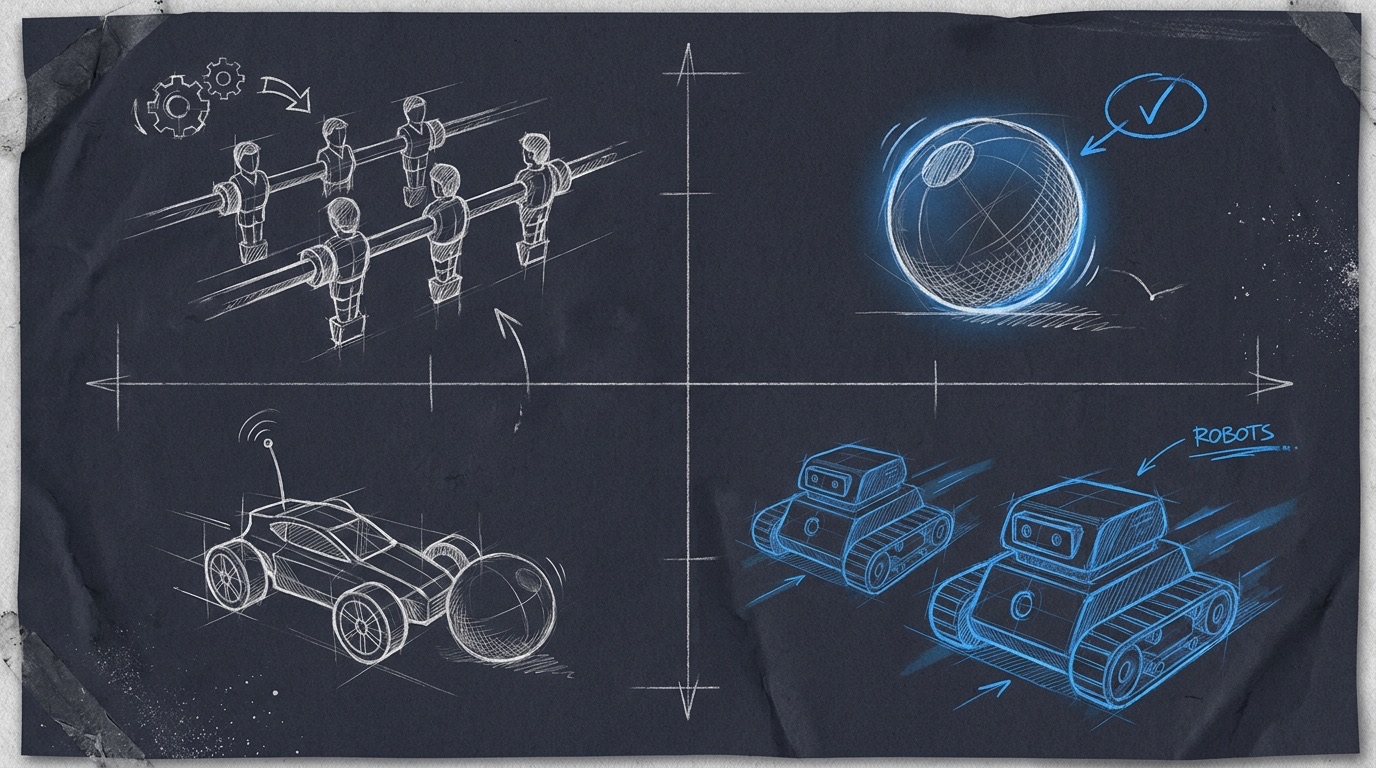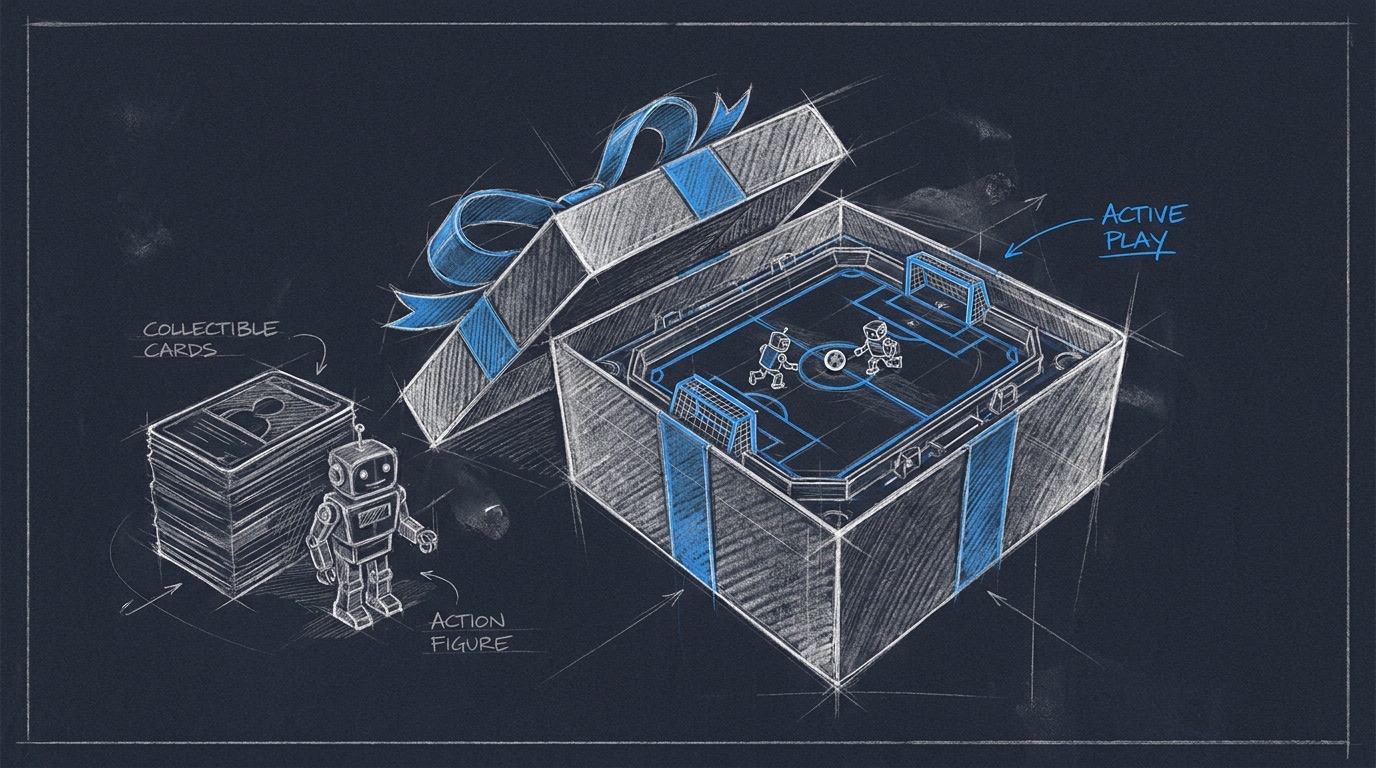
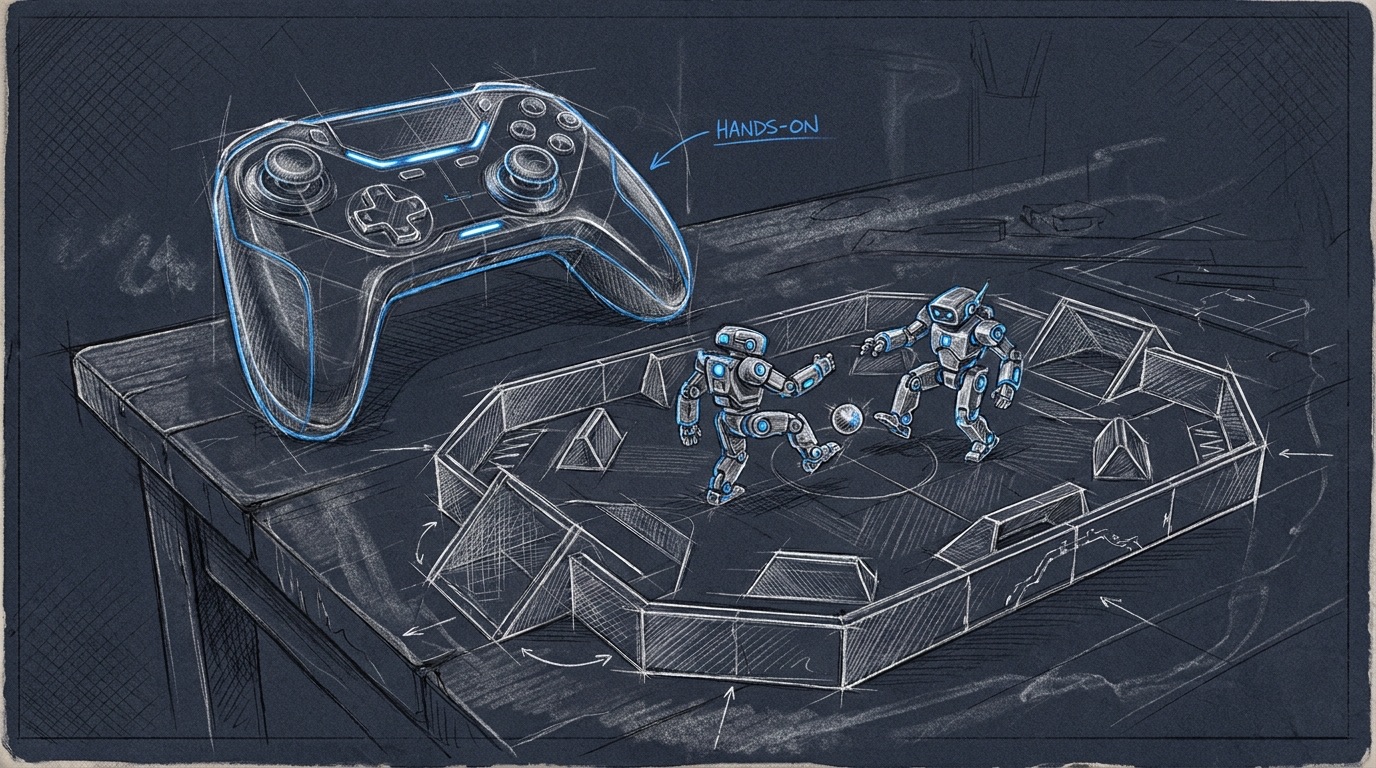
Parents in 2026 are choosing physical STEM toys because 73% say their kids could use a tech detox and 53% are encouraging offline hobbies. The appeal of a game like RoboSoccer is that the technology lives in the robots on the table, not in a screen you stare at, it is tech you do with your hands.
The screen-time backlash is real
The numbers are striking. A landmark study found 40% of kids have a tablet by age 2. Meanwhile, the vast majority of parents feel their children are overexposed: 73% say their kids could use a tech "detox," and 53% actively encourage offline hobbies. Parents are not anti-technology, they are anti-passive-screen-time.
| Stat | Figure | Source |
|---|---|---|
| Parents who say kids could use a tech detox | 73% | Fortune / survey |
| Parents who encourage offline hobbies | 53% | Kids Mental Health Foundation |
| Kids who have a tablet by age 2 | 40% | Common Sense Media |
"Screen-free" vs "tech you do with your hands"
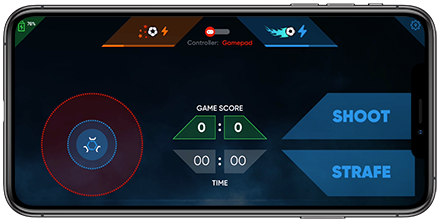
Here is the honest nuance. RoboSoccer is not a fully screen-free toy, it is controlled through a companion iOS/Android app (or a gamepad). So why does it belong in a conversation about getting kids off screens?
Because the experience is fundamentally different from passive screen time. The app is a controller, not the destination. Kids are looking up at two physical robots driving, grabbing, and shooting a real ball across a real arena, the same way a game controller points your attention at the TV game, not the controller in your hands. The fun, the skill, and the social play all happen on the table, not in the glass.
Why that distinction matters to parents
- Eyes up, not down — kids watch the robots and each other, not a scrolling feed.
- Physical and social — it is two players head-to-head at a table, not solo screen scrolling.
- Hands-on tech literacy — controlling omni-directional driving and timing a grab-and-kick shot teaches real cause-and-effect with hardware.
- It packs away — the arena folds into a box, so it is a deliberate "let's play" object, not an always-on device.
Where a robot soccer game fits
This is the gap RoboSoccer fills: it is a robotic, tech-rich game whose action is entirely physical and social. Kids pick their robot's color and it lights up to match, LED goals flash when they score, and two players compete across a table. The technology is the point, but the screen is not. For the full overview, see what is RoboSoccer, and to compare it with other options, see the best STEM soccer toys for 2026.
The play has been validated on film with real kids, this is a finished, working product. The company licenses the technology to US partners on an open, non-exclusive basis. Brands and retailers can start a conversation.
Key facts
73% of parents say their kids could use a tech "detox."
Source · https://fortune.com/well/2025/03/27/children-detox-technology/
53% of parents encourage their kids to take up offline hobbies.
Source · https://www.kidsmentalhealthfoundation.org/about/media-center/press-releases/parental-survey-shows-privacy-safety-concerns-with-screen-time
40% of children have a tablet by age 2.
Source · https://www.commonsensemedia.org/press-releases/digital-childhood-starts-at-age-two-landmark-study-shows-evolution-of-young-childrens-media-use
FAQ
- Is RoboSoccer a screen-free toy?
- Not strictly. RoboSoccer is controlled by a companion app or a gamepad. But the app works like a game controller, the action is the physical robots on the arena, so kids keep their eyes up and play in the real world rather than staring at a screen.
- How does an app-controlled toy help reduce screen time?
- The app is a controller, not the experience. Children watch two robots drive, grab, and shoot a real ball, and they compete head-to-head at a table. The technology supports physical, social play instead of replacing it with passive scrolling.
- Why are parents choosing physical STEM toys in 2026?
- Because most parents feel kids are overexposed to screens. Surveys show 73% want a tech detox and 53% encourage offline hobbies, while 40% of kids have a tablet by age 2. Physical STEM toys teach technology while keeping play hands-on.
Want to build it in America?
Three clear ways to partner with us.
License the technology, co-develop and launch, or brand and grow the platform. Tell us about your company and we'll set up a short call.
Start a conversation