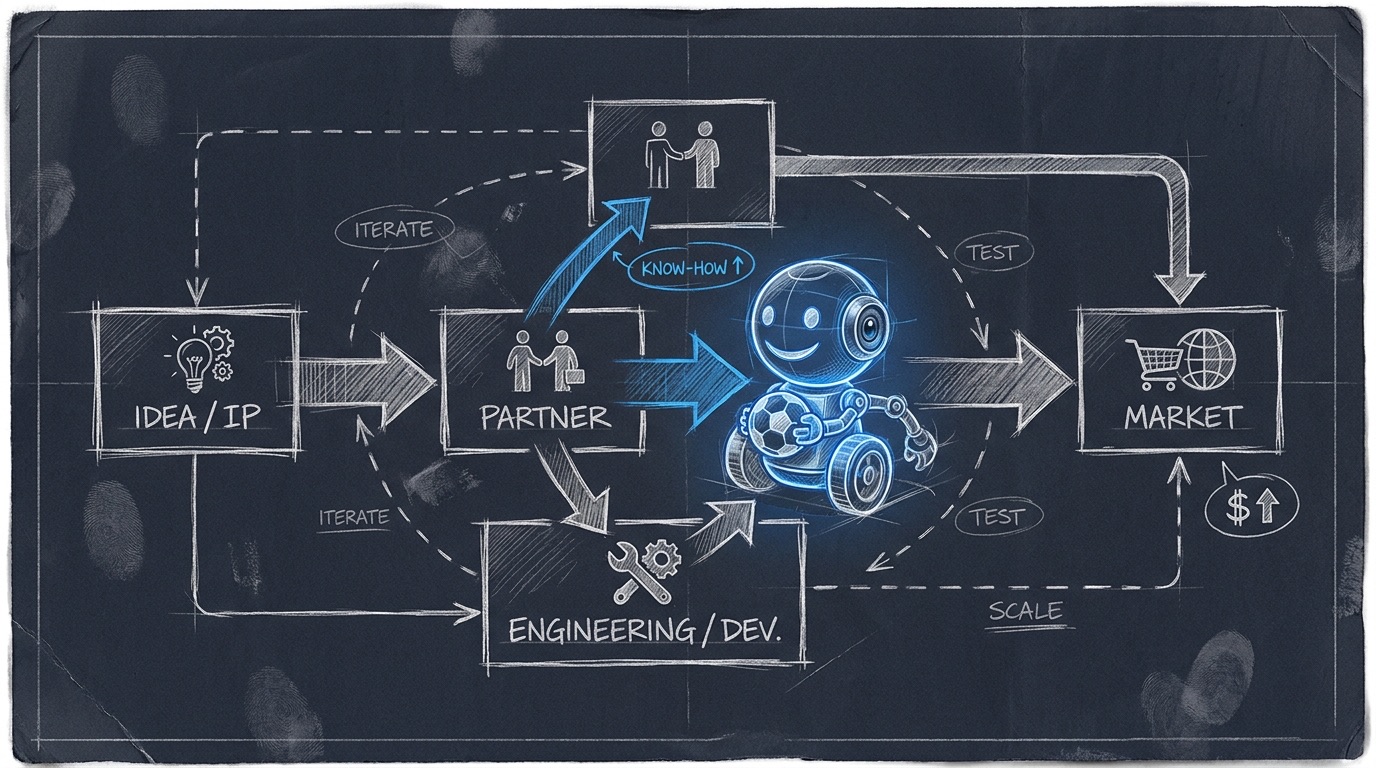
Licensing a hardware product to a US partner means giving them the proven design, firmware, software, and know-how so they can manufacture, brand, and sell it — while you avoid building a factory or a sales org. It works in four steps: assess the IP, define the model, structure the agreement, and support the partner.
This guide covers the general process any hardware owner can follow, then shows how it maps onto a real example: RoboSoccer, a finished robot soccer platform available to license today.
Licensing a product is not selling units
First, a distinction that trips people up. Selling units means you manufacture finished goods and a buyer pays per unit. Licensing the product and know-how means you grant a partner the right to make and sell the product themselves, using your designs, firmware, app, and engineering knowledge.
For a small team with a great product but no appetite to run global manufacturing and US distribution, licensing is often the faster, lower-risk path. You monetize what you are best at — the invention — and let a partner do what they are best at: production and reaching the market.
The four-step process
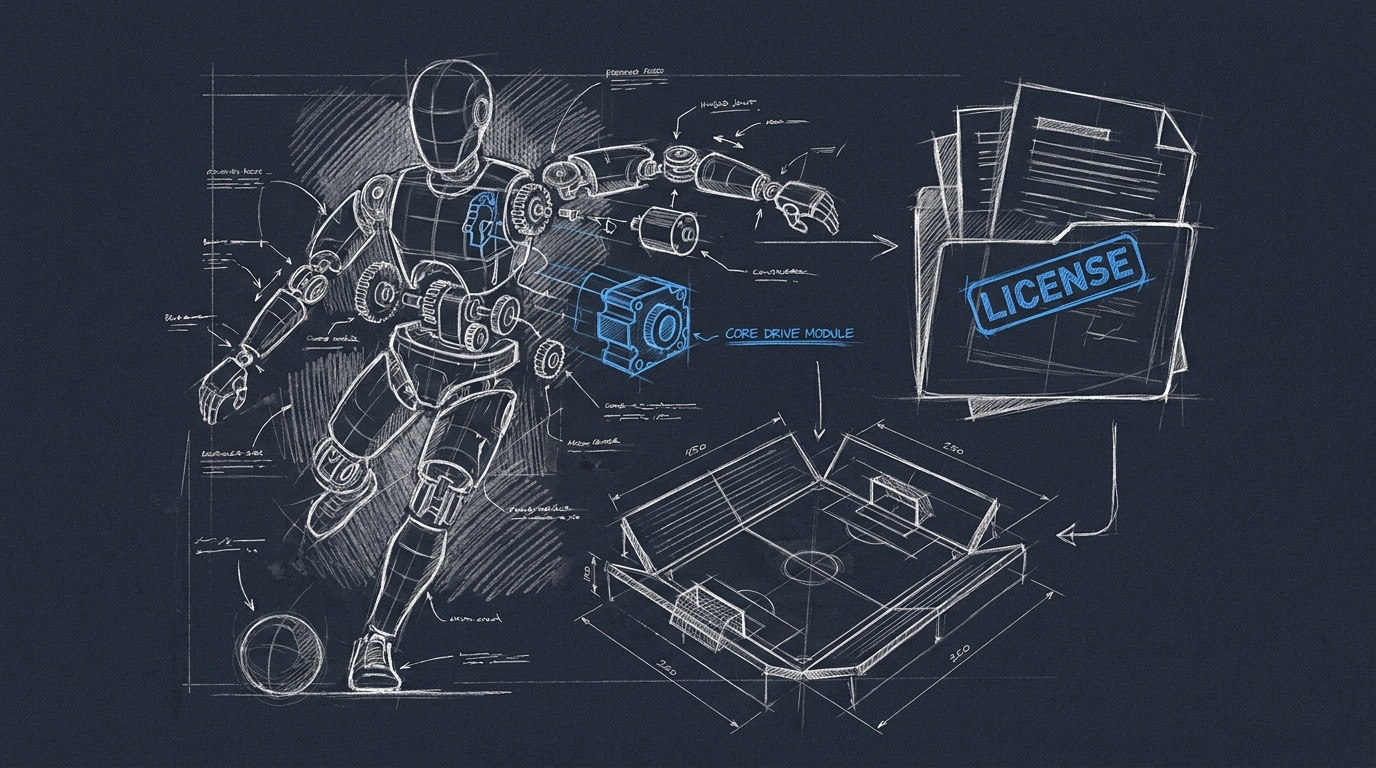
- Assess the IP and know-how. Inventory exactly what you can transfer: mechanical and electronic designs, firmware, software/apps, brand assets, gameplay or usage footage, and the undocumented engineering know-how. Be honest about what is proven (does it work? do users love it?) versus what still needs work (volume cost-down, certification).
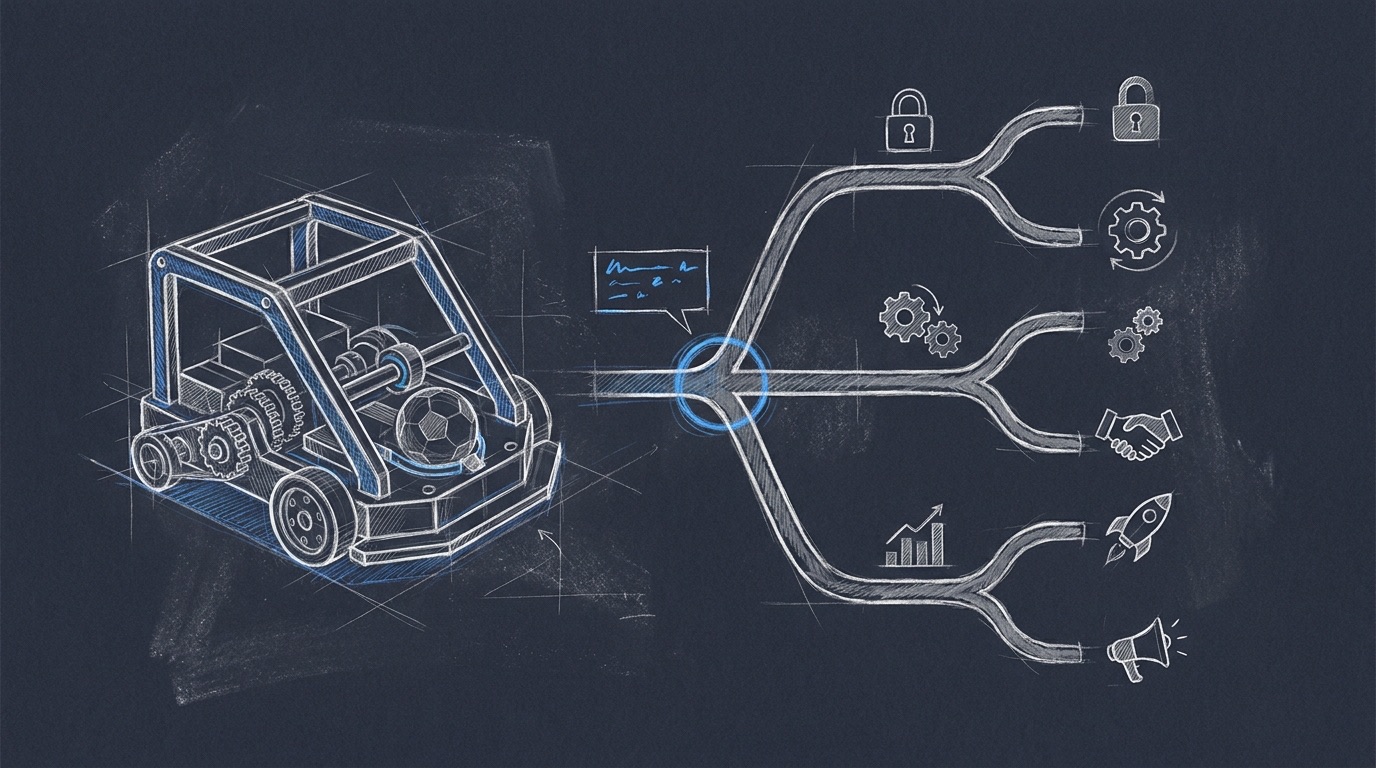
- Define the model. Decide how a partner engages. Do they license the raw technology and build their own products? Do you co-develop the last mile together? Do they white-label and grow a line under their brand? Different partners want different depths of involvement.
- Structure the agreement. Choose a licensing structure (see the table below), agree on scope — products, price tiers, channels, geography — and decide whether it is exclusive or non-exclusive. Open, non-exclusive terms keep more doors open and avoid betting everything on one partner.
- Support the partner. A clean handoff is not a PDF dump. The originating team transfers know-how, answers engineering questions, and ideally stays involved through the first production run and launch so the partner does not have to rediscover hard-won lessons.
Common hardware licensing structures
| Structure | What the partner gets | Best when |
|---|---|---|
| Technology license | Rights to the core IP — designs, firmware, app, drive systems — to build their own products | The partner is a capable manufacturer that wants to engineer and own its own product line |
| Co-development | A finished, manufacturing-ready, certified product, built jointly, with the original team staying in | The partner wants speed to market and values keeping the inventors involved through launch |
| White-label / brand license | A ready platform to put their brand on and grow into a line | The partner has strong brand and distribution but does not want to build hardware from scratch |
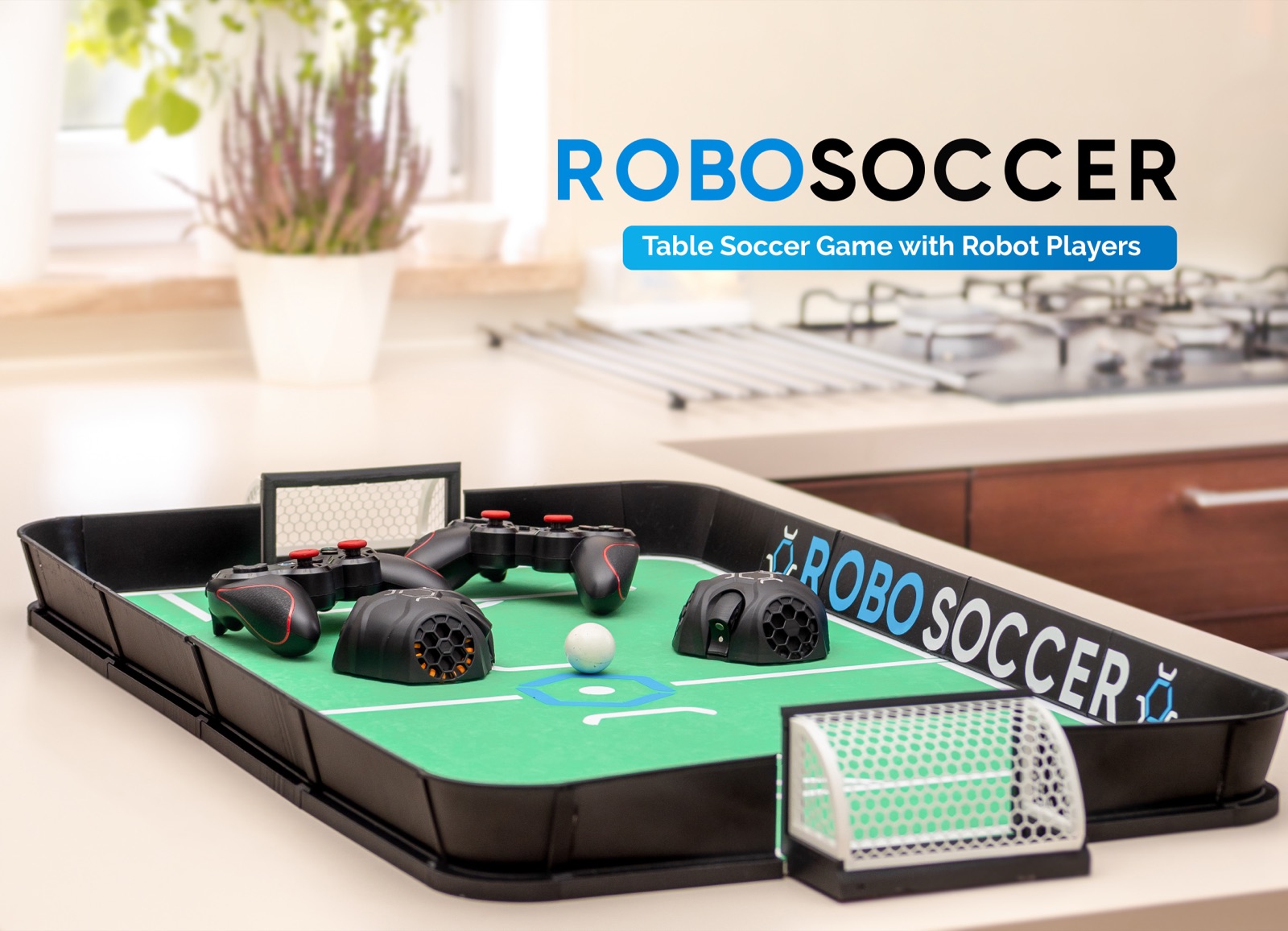
A real example: RoboSoccer
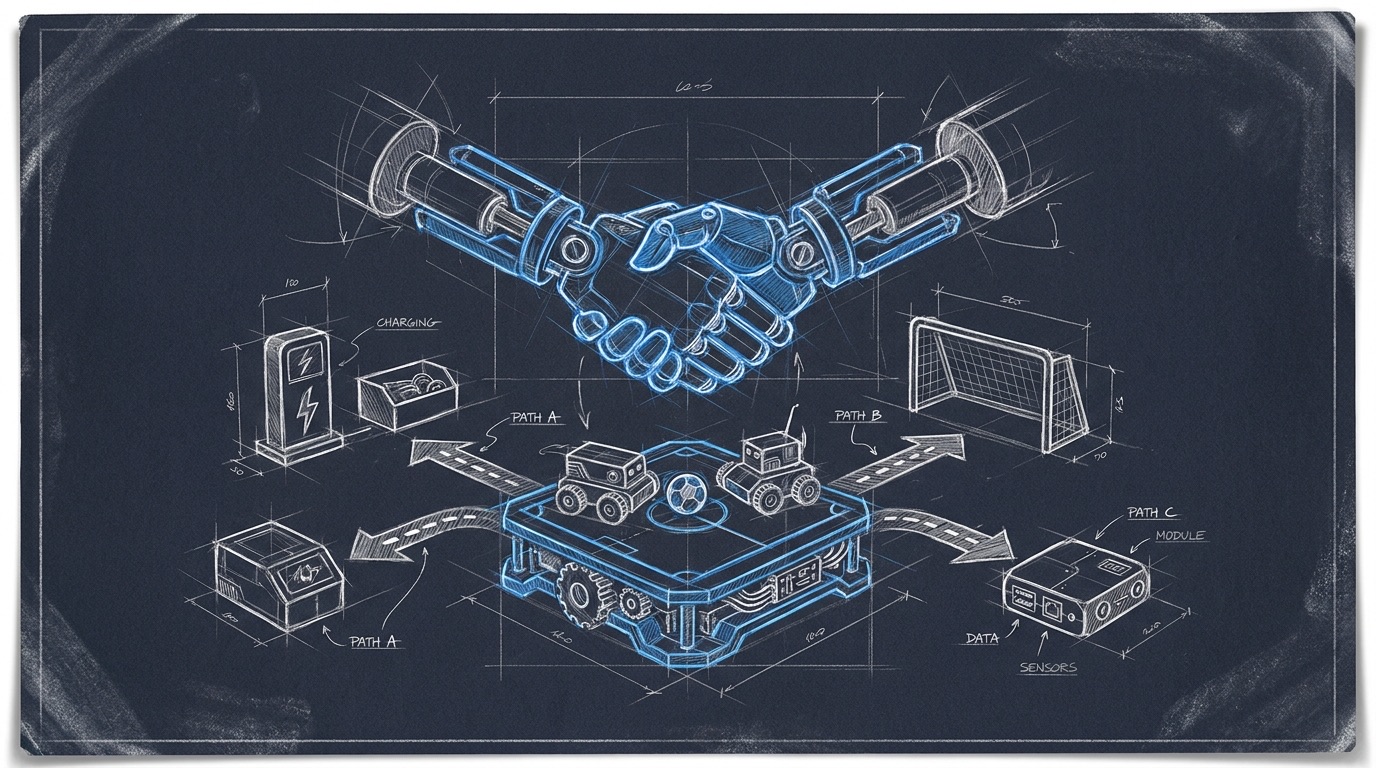
RoboSoccer is the first table soccer game with real robot players — two omni-wheel robots with a proprietary grab-and-kick mechanism, a companion iOS/Android app and gamepad, an arena that folds into a box, and LED goals that flash when you score. It is the product of 2+ years of engineering and has been validated on film with real kids. See the full overview of what RoboSoccer is.
Step 1 — the IP, assessed
The transferable asset is clean and unencumbered: the full hardware design, the drive system, the grab-and-kick mechanism, the firmware, the built app, the brand, the footage, and the know-how. Crucially, there is no patent — the value is the finished, working product and the R&D behind it, not a filing. We are also explicit: RoboSoccer has proven PLAY, not yet proven sales at scale. Scaling is the joint work.
Step 2 — the model, defined
RoboSoccer offers three open, non-exclusive ways to engage, mapping directly onto the structures above:
- License the Technology — take the unencumbered IP and build your own US products (technology license).
- Co-Develop & Launch — finish the last mile together (manufacturing-ready, costed for volume, US-certified), with the original team staying in through launch (co-development).
- Brand & Grow the Platform — put your brand on it and grow a line of new teams, modes, and other tabletop sports on the same architecture (white-label / brand license).
Step 3 — the agreement, structured
Terms are open and non-exclusive across products, price tiers, and channels. A partner does not have to wait on, or insist on, a single exclusive deal to start. That keeps the platform able to support multiple partners at different tiers.
Step 4 — the support, delivered
In the Co-Develop model especially, the founding team — deep-tech robotics builders — stays involved through the first production run and launch, transferring the know-how that does not fit in a spec sheet.
The bottom line
Licensing hardware to a US partner is a discipline: assess honestly, define the model, structure open terms, and support the handoff. RoboSoccer is a clean worked example — a finished, proprietary, non-exclusive, patent-free product whose play is proven and whose scaling is the shared opportunity.
If you want to evaluate it, start a conversation.
Key facts
Educational robots market: $1.4B (2022) → $3.2B (2027), 17.3% CAGR.
Source · https://www.marketsandmarkets.com/Market-Reports/educational-robot-market-28174634.html
STEM toys market: $21.65B (2025) → $34.75B (2031), 8.2% CAGR.
Source · https://www.mordorintelligence.com/industry-reports/stem-toys-market
FAQ
- What does it mean to license a hardware product instead of selling units?
- Selling units means you manufacture finished goods and a buyer pays per unit. Licensing means you grant a partner the rights to your designs, firmware, app, and know-how so they manufacture and sell the product themselves — you monetize the invention without running a factory.
- Is RoboSoccer patented?
- No. There is no patent. The licensable asset is the finished, working product — proprietary hardware design, firmware, the built app, the brand, the footage, and 2+ years of R&D know-how. The IP is clean and unencumbered.
- Is the RoboSoccer license exclusive?
- No. Partnerships are open and non-exclusive across products, price tiers, and channels. A partner does not have to wait on a single exclusive deal to begin.
- Has the product proven it sells at scale?
- No. RoboSoccer has proven PLAY — validated on film with real kids — but not yet proven sales at scale. Volume manufacturing, US certification, distribution, and marketing are the work to do together with a partner.
Want to build it in America?
Three clear ways to partner with us.
License the technology, co-develop and launch, or brand and grow the platform. Tell us about your company and we'll set up a short call.
Start a conversation