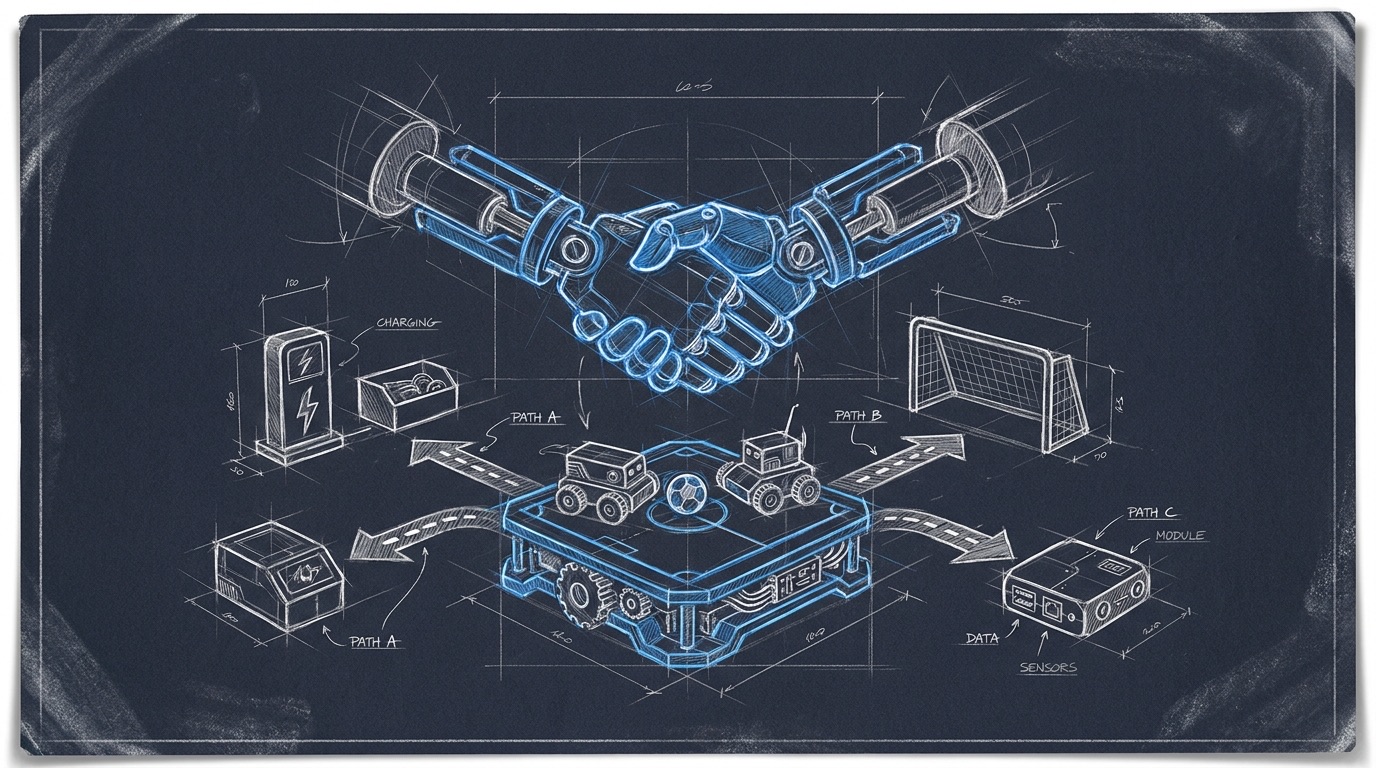
There are three ways to bring RoboSoccer — a finished, proprietary robot soccer platform — to market: License the Technology and build your own US products, Co-Develop & Launch with the original team through launch, or Brand & Grow the Platform under your own name. All three are open and non-exclusive.
This is the decision page. If you already know RoboSoccer is real and proven, the question is no longer whether to engage but how. Below is a side-by-side framework with a clear verdict for each model.
The 3 models at a glance
| Model | What you get | You bring | Best fit if… |
|---|---|---|---|
| License the Technology | The proven, unencumbered IP: drive system, grab-and-kick mechanism, app, and full hardware design — to build your own products | Your own engineering, manufacturing, certification, and go-to-market | You are a capable hardware company that wants to own and evolve its own product line on a proven foundation |
| Co-Develop & Launch | A jointly finished, manufacturing-ready, volume-costed, US-certified product — with the original team staying in through launch | Manufacturing and distribution muscle, plus commitment to a shared launch | You want the fastest, lowest-risk path to a shippable US product and value keeping the inventors involved |
| Brand & Grow the Platform | A ready platform to put your brand on and extend into a line — new teams, modes, and other tabletop sports | A strong brand, channels, and an appetite to grow a category | You have brand and distribution power but do not want to build hardware from scratch |
1. License the Technology
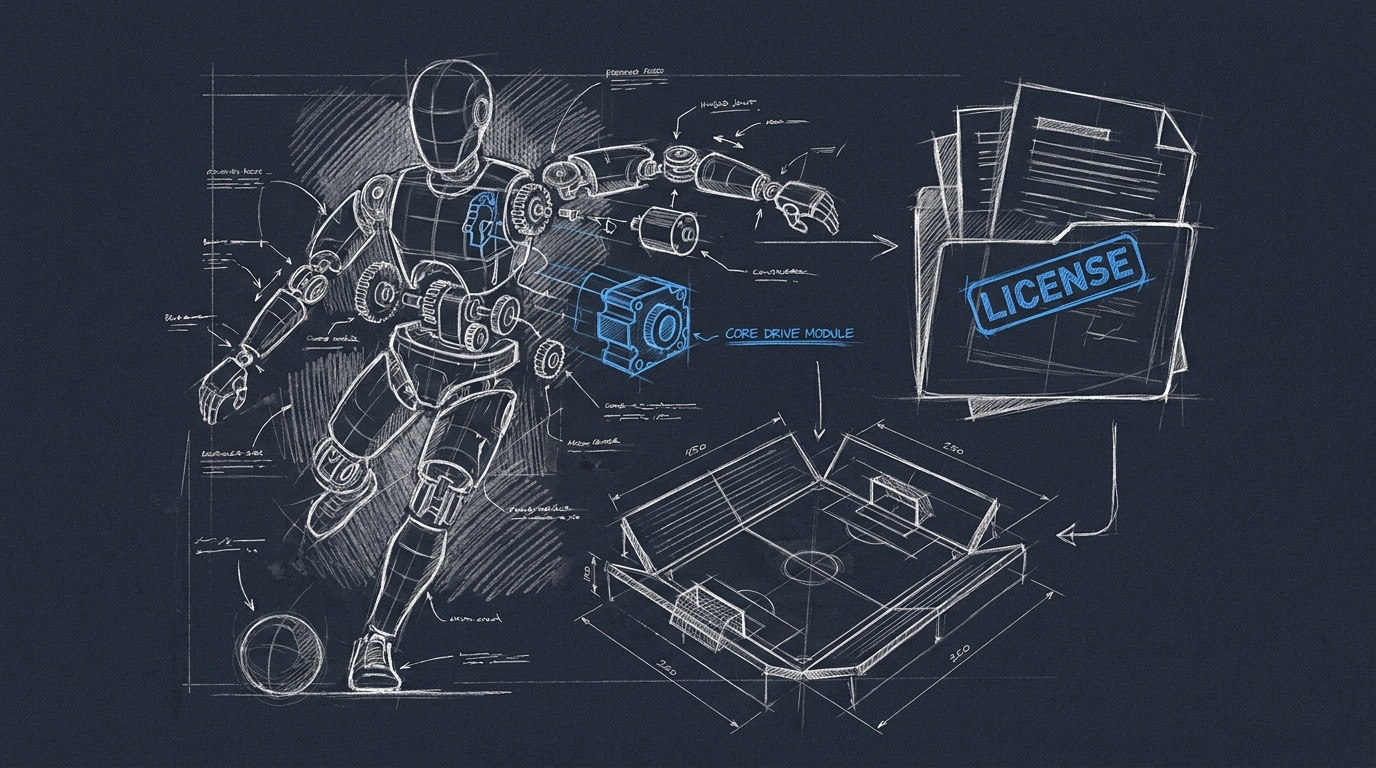
Take the proven, unencumbered IP and build your own US products on it. You get the drive system, the proprietary grab-and-kick mechanism, the companion app, and the full hardware design as a foundation, then engineer and ship under your own direction.
2. Co-Develop & Launch
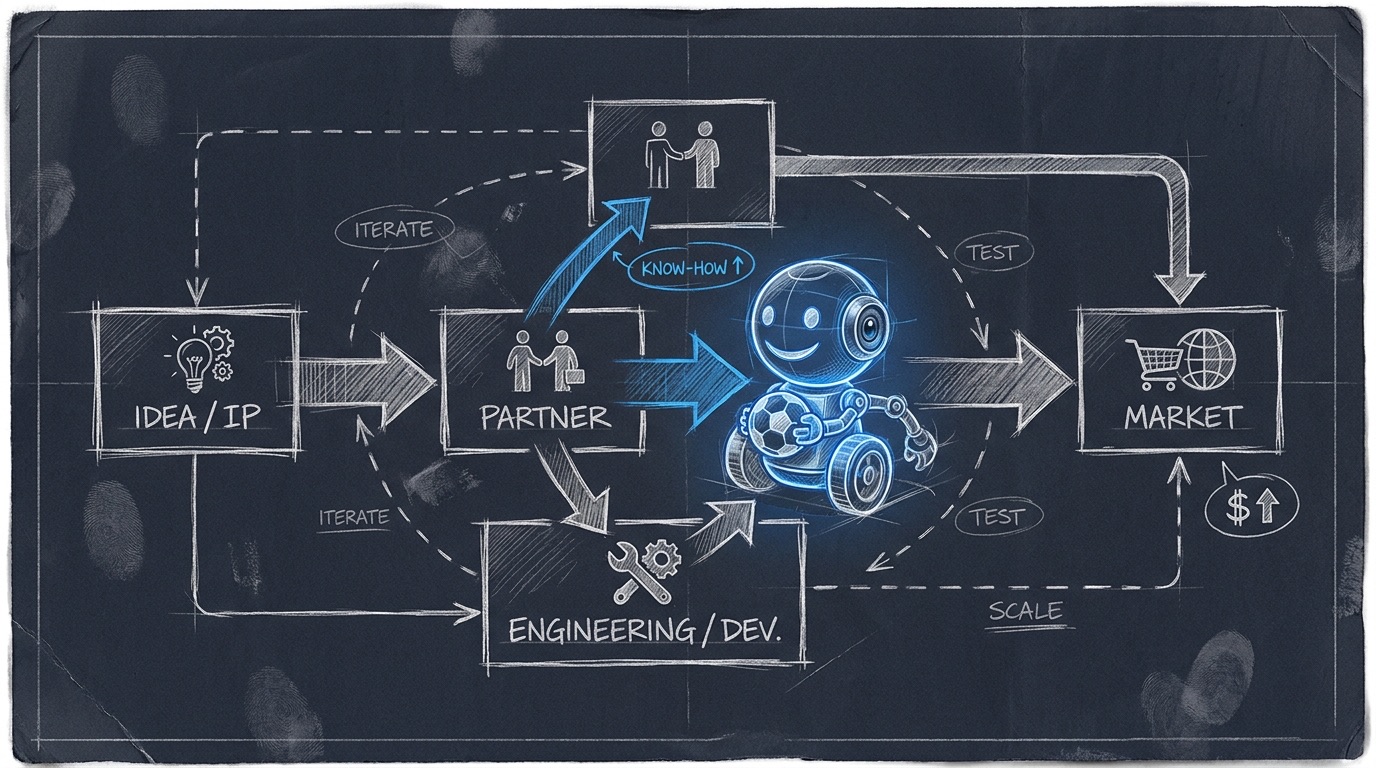
Finish the last mile together. The product is play-validated; co-development takes it the rest of the way — manufacturing-ready, costed for volume, and US-certified. The original deep-tech team stays in through launch, transferring the know-how that does not live in a spec sheet.
3. Brand & Grow the Platform
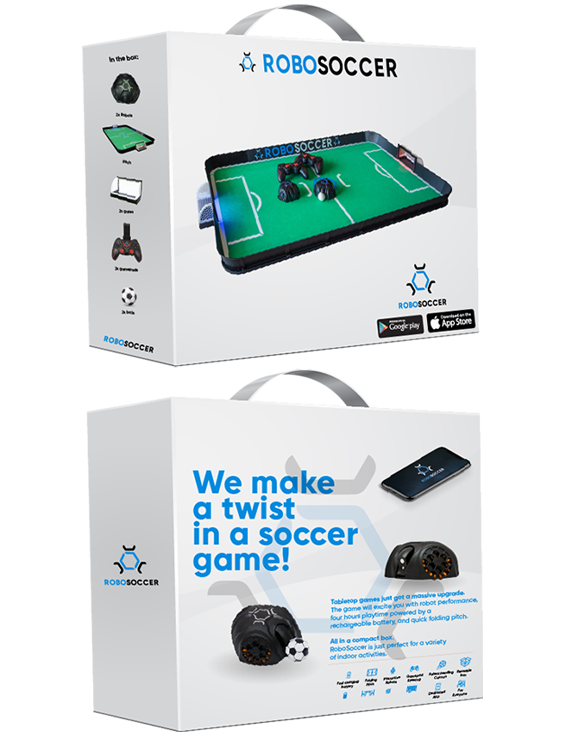
Put your brand on it and grow a line. The same architecture supports new teams, new game modes, and other tabletop sports — so this is not a single SKU but a platform you can extend over time under your own identity.
What every model shares
- Open and non-exclusive. Across products, price tiers, and channels. You never have to wait on, or hold out for, a single exclusive deal.
- No patent — clean, unencumbered IP. The asset is the finished, working product: hardware design, firmware, the built iOS/Android app, the brand, the footage, and 2+ years of R&D know-how.
- Proven play, not proven sales at scale. RoboSoccer's play is validated on film with real kids. Scaling — manufacturing, certification, distribution, marketing — is the shared work, and we say so plainly.
How to choose
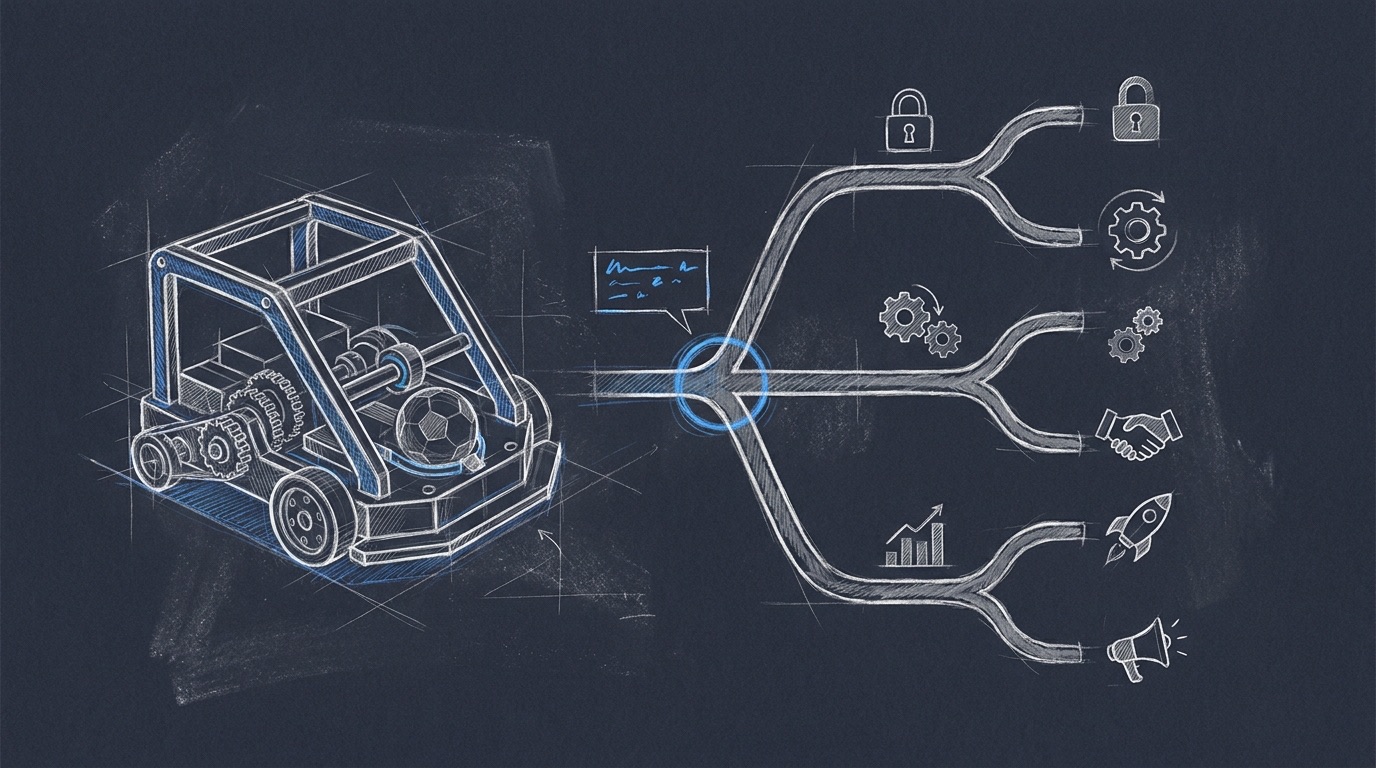
Match the model to what you bring. If you have engineering and want control, license the technology. If you have manufacturing and distribution and want speed, co-develop. If you have a brand and channels and want a category, white-label and grow. For the underlying IP inventory, see robotics toy IP available to license; for the mechanics of structuring a deal, see how to license a hardware product to a US partner; and for the product itself, see what RoboSoccer is.
Whichever path fits, the first step is the same. Start a conversation and we will open the data room.
Key facts
Educational robots market: $1.4B (2022) → $3.2B (2027), 17.3% CAGR.
Source · https://www.marketsandmarkets.com/Market-Reports/educational-robot-market-28174634.html
Board/tabletop games market: $15.83B (2025) → $39.34B (2034), 10.7% CAGR.
Source · https://www.fortunebusinessinsights.com/board-games-market-104972
Soccer-toy sales rose +160% globally through April 2026, now 9% of the sports-toy category.
Source · https://www.circana.com/post/soccer-fever-fuels-global-surge-in-toys-and-collectibles-circana-reports
FAQ
- What are the three ways to bring RoboSoccer to market?
- License the Technology (take the unencumbered IP and build your own US products), Co-Develop & Launch (finish a manufacturing-ready, US-certified product with the original team through launch), or Brand & Grow the Platform (white-label it and extend the line under your brand). All three are open and non-exclusive.
- Is the partnership exclusive?
- No. All three models are open and non-exclusive across products, price tiers, and channels. The platform can support more than one partner, so you do not have to wait on a single exclusive deal.
- Is RoboSoccer patented?
- No. There is no patent. The licensable asset is the finished, working product — proprietary hardware design, firmware, the built app, the brand, the gameplay footage, and the know-how from 2+ years of R&D. The IP is clean and unencumbered.
- Is RoboSoccer proven to sell at scale?
- No. Its PLAY is proven — validated on film with real kids — but sales at scale are not yet proven. Manufacturing, certification, distribution, and marketing are the work to do together with a partner.
Want to build it in America?
Three clear ways to partner with us.
License the technology, co-develop and launch, or brand and grow the platform. Tell us about your company and we'll set up a short call.
Start a conversation