Short answer: A toy royalty is a percentage of the licensee's net sales, meaning what the toy company invoices its retailers minus agreed deductions, not the price on the shelf. Inventors who license a toy concept usually get 3 to 5 percent of net sales, according to The Toy Association's 2026 inventor guide. Character and brand licenses cost toy companies more: JAKKS Pacific reports royalties from 1 to 22 percent of net sales, and Funko paid an average of 17.4 percent in 2025.
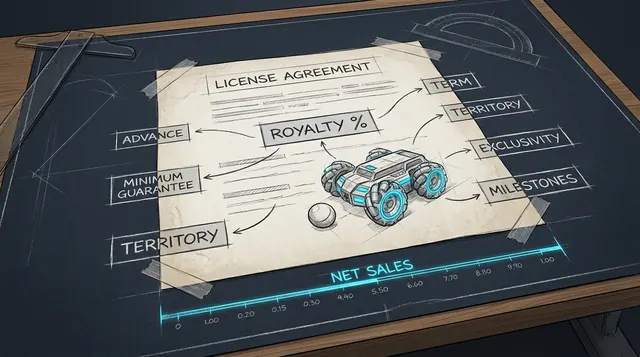
The rate is one line of the deal. The advance, the minimum guarantee, the term, the territory, exclusivity and milestones decide what a license is worth. Below is each term, with public figures where they exist. RoboSoccer, table soccer with real robot players, is licensed to toy companies, so these are terms we work with ourselves. This is an explainer, not legal advice.
Royalty rates at a glance
| Deal | Typical royalty | Paid on | Source |
|---|---|---|---|
| An inventor licenses a toy concept to a toy company | 3–5% | Net sales | The Toy Association, Toy Inventor and Designer Guide (June 2026) |
| The same deal, as a veteran inventor puts it | About 5% | Net sales | inventRight (Stephen Key) |
| An idea sent through Mattel's public idea portal | Up to 1.5% | Invoice price less 10% | My Mattel Ideas submission agreement |
| Character, brand and concept licenses at a public toy maker | 1–22% | Net sales | JAKKS Pacific, 2025 annual report |
| Pop-culture licenses at a collectibles maker | 17.4% average in 2025 | Sales of licensed products | Funko, 2025 annual report |
| Established brands, per a legal guide | 5–15% | Gross or net sales | UpCounsel |
| A toy agent's share of the inventor's royalty | 15–60% of the royalty | Royalties paid to the inventor | The Toy Association guide |
Two kinds of toy license, two price ranges
Toy licensing covers two different deals, which is why quoted rates seem to disagree.
Concept or invention licensing. An inventor, or a team that has built a product, licenses the idea, design or mechanism to a toy company, which then pays for tooling, safety testing, manufacturing, marketing and shelf space. Because the licensee carries those costs and the risk, the royalty is lower: The Toy Association puts it at 3 to 5 percent of net sales. Hasbro's 2025 annual report describes the model from the buyer's side: the rights it licenses from independent designers "are usually exclusive for particular categories," and it pays the designer "a royalty on our net sales of the item."
Brand and character licensing. A toy company pays to put someone else's brand on its products: a film franchise, a sports league, a video game. The brand brings demand the toy company would otherwise have to create, so the rate is higher. JAKKS Pacific's filing gives a range of 1 to 22 percent of net sales for its product and concept licenses. Funko's average rate paid to licensors was 17.4 percent in 2025. It is a big market: Licensing International counts $46.4 billion of licensed toy sales worldwide in 2025.
Large toy companies do both at once. Hasbro's royalty bill was $368.9 million in 2025, or 7.8 percent of net revenue, a blend of designer royalties and entertainment licenses. Mattel's royalty expense was $264.6 million. Neither company publishes the rate it pays on any single deal.
What the royalty is calculated on
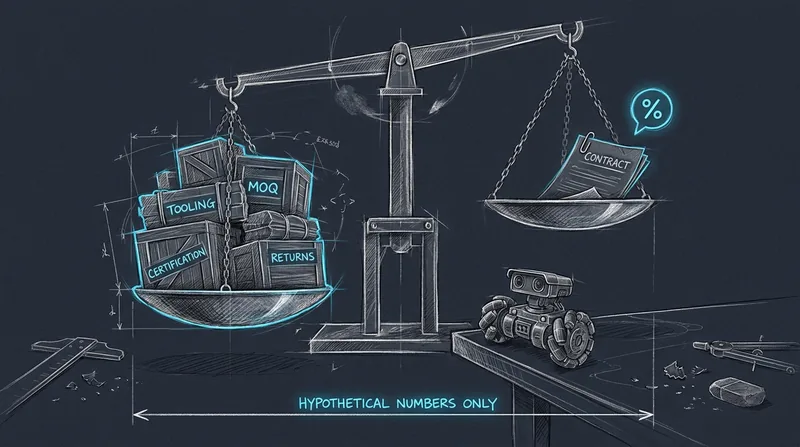
Nearly every toy license pays on net sales. WIPO's licensing manual explains why: costs such as packaging and freight have nothing to do with the licensed technology, "so these and other unrelated items are usually excluded." The definition of net sales is where the negotiation happens: returns, discounts, rebates, freight and taxes are the usual deductions, and each one shrinks the base.
A worked example with round numbers: if a toy company invoices retailers $20 a unit, a 4 percent royalty pays 80 cents a unit, whatever the toy sells for in the store. On 100,000 units, that is $80,000 before any agent's share.
Mattel's public portal shows how much the base matters. Under the My Mattel Ideas submission agreement, a royalty agreement "would provide … for Mattel to pay You a royalty … of up to 1.5% of Mattel's sales" of products that use the idea, and the royalty "will be calculated on the invoice price paid to Mattel less a 10% deduction." Applying 1.5 percent to 90 percent of the invoice price gives an effective rate of up to 1.35 percent: up to 27 cents on the same $20 invoice. The number is often repeated as "Mattel's royalty rate." It is the ceiling in the terms for ideas sent through that portal, not a rate Mattel discloses for deals it negotiates with professional inventors.
Advances and minimum guarantees
An advance is money paid when the deal is signed and then earned back from the royalties that follow. The licensor receives nothing more until sales have covered it. A minimum guarantee is a floor: the licensee pays at least a set amount over the contract, whatever the sales. JAKKS Pacific describes licenses that "may require minimum royalty guarantees and up-front or advanced royalty payments against those guarantees." Hasbro says its designer agreements "may also provide for advance royalties and minimum guarantees."
The public filings show how large these commitments get in brand licensing. At the end of 2025, JAKKS Pacific owed $189.8 million in future minimum royalty guarantees, Funko expected to pay $128.2 million, and Mattel listed $336.8 million of future minimum payments under licensing and similar agreements.
For inventor deals, no neutral published benchmark exists for the size of an advance; a "typical" figure is someone's own deals. What holds everywhere is the structure: an advance is recouped from royalties, and a minimum guarantee gives an exclusive license teeth.
Term, renewal and sell-off
Brand licenses are short. Funko's filing says its licenses "typically have short terms (between two and three years), are not automatically renewable and, in some cases, give the licensor the right to terminate the license agreement at will." UpCounsel's guide notes that renewal is "often tied to performance metrics," and that agreements usually include a sell-off period so the licensee can clear remaining stock after the license ends.
Invention licenses tie the royalty to the product rather than to a brand calendar. Mattel's portal terms, for example, limit any royalty to "Mattel's sales of products that incorporate Your Product." What ends the deal early is usually the performance terms below.
Territory and channels
A license grants rights in a defined territory, and often only for certain products and channels. Funko's rights "are typically limited to specific properties, product categories, territories and, in some cases, sales channels." Hasbro's character licenses "may be exclusive for specific products or product lines in specified territories, or may be non-exclusive." WIPO adds that a license covering several territories "may be exclusive in one while non-exclusive in another."
For a US toy company, the practical questions are whether it needs North America or the world, and whether online and mass retail are both in scope.
Exclusive or non-exclusive
WIPO's manual separates three grades. An exclusive license shuts out everyone else in the territory, including the licensor. A sole license lets the licensor and one licensee use the technology, and no one else. A non-exclusive license lets the licensor sign several licensees. Both sides have real reasons for their preference:
- Why licensees ask for exclusivity. Tooling, safety testing and launch marketing are expensive. WIPO notes that where a licensee must invest heavily, "most potential licensees would seek exclusivity, at least in certain territories." Hasbro's designer rights are "usually exclusive for particular categories."
- Why licensors often prefer non-exclusive. WIPO calls it "the preferred option of most licensors": spreading risks and rewards across several licensees means "the licensor does not depend on the success of one licensee." Brand licensing works largely this way; Funko says "Our licenses are generally not exclusive."
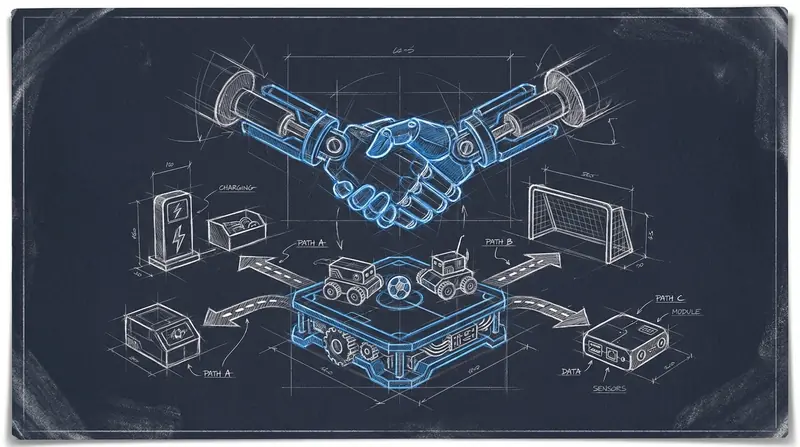
Exclusivity can also be partial. WIPO notes it "may be limited, for example, to a field of use or period of time or linked to the achievement of milestones." RoboSoccer is licensed openly and non-exclusively, across products, price tiers and channels. The glossary defines the term, and three ways to bring a robot soccer platform to market shows how it works in practice.
Milestones, performance and reversion
An exclusive license with no obligations lets a licensee shelve a product while still blocking everyone else. Performance terms prevent that. WIPO describes a general duty on the licensee to use "all reasonable efforts, or best efforts if the license is exclusive," and recommends spelling out concrete actions instead, such as agreed marketing spend. Milestones turn that duty into dates and numbers the licensor can check. If the licensee misses an annual minimum royalty, WIPO lists the usual remedies: "termination of the license or conversion of the exclusive license to a non-exclusive license."
Audits and reporting
The licensor sees only the numbers the licensee reports, so licenses give the licensor the right to audit. WIPO says the licensee must "put in place stringent accounting procedures, institute a regular reporting mechanism and allow for the auditing of its accounts." Audits are not a formality. JAKKS Pacific notes its licenses "are subject to audits by the licensor, which can result in additional payments," and Funko carried a $29.6 million accrual for ongoing and future royalty audits at the end of 2025.
Agents and brokers take a share
Many inventors reach toy companies through an agent. The Toy Association's guide says brokers "work on commission, and their fees may range from 15 to 60 percent of the royalties paid to the inventor." Two long-running agencies, Anjar Co. and Becker Associates, publish their split: the inventor receives 60 percent of royalties and advances, and the agency keeps 40 percent. On a 4 percent royalty, a 40 percent agent share leaves the inventor 2.4 percent of net sales.
Licensing a finished product, not an idea
The ranges above mostly describe concepts licensed at the idea or prototype stage. A finished hardware product is licensed as a package: designs, firmware, an app, footage and know-how, often with the original team involved through launch. The same terms apply; they are grouped differently. How to license a hardware product to a US partner walks through the four steps, and robotics toy IP available to license shows what the package looks like for a robot soccer game.
RoboSoccer's play is proven on film with real kids. Sales at scale are not yet proven, and that is the work a licensee does with us. Toy companies can start a conversation.
Key facts
Inventor royalty rates usually range from 3 to 5 percent of an item's net sales; brokers work on commission, with fees that may range from 15 to 60 percent of the inventor's royalties (Toy Inventor and Designer Guide, Eighth Edition, June 2026).
Source · https://www.toyassociation.org/common/Uploaded%20files/toyassociation/inventors-designers/toy-association-toy-inventor-and-designer-guide.pdf
My Mattel Ideas submission agreement: a royalty of up to 1.5% of Mattel's sales of products that use the idea, calculated on the invoice price paid to Mattel less a 10% deduction (checked September 29, 2026).
Source · https://www.mymattelideas.com/ideas/myidea
JAKKS Pacific's license agreements call for royalties ranging from 1% to 22% of net sales; future minimum royalty guarantees were $189.8 million at December 31, 2025.
Source · https://www.sec.gov/Archives/edgar/data/1009829/000118518526000723/jakk10k123125.htm
Funko's average royalty rate was 17.4% in 2025; its licenses typically run two to three years, are not automatically renewable and are generally not exclusive.
Source · https://www.sec.gov/Archives/edgar/data/1704711/000170471126000020/fnko-20251231.htm
Hasbro's rights to outside designers' ideas are usually exclusive for particular categories, paid by a royalty on Hasbro's net sales; royalties totaled $368.9 million, 7.8% of net revenues, in 2025.
Source · https://www.sec.gov/Archives/edgar/data/46080/000004608026000011/has-20251228.htm
WIPO: a license may be exclusive, sole or non-exclusive; non-exclusive is "the preferred option of most licensors"; a missed minimum royalty can lead to termination or conversion of an exclusive license to non-exclusive.
Source · https://www.wipo.int/edocs/pubdocs/en/licensing/906/wipo_pub_906.pdf
Mattel's own royalty expense was $264.6 million in 2025, and the company listed $336.8 million of future minimum payments due under licensing and similar agreements at year-end 2025.
Source · https://www.sec.gov/Archives/edgar/data/63276/000162828026010716/mat-20251231.htm
Supporting benchmarks used above: Licensing International's 2026 global study counts $46.4 billion in licensed toy product sales for 2025; UpCounsel's guide puts established toy-brand royalties at 5–15% of gross or net sales; toy-inventor agencies Anjar Co. and Becker Associates publish a 60%/40% inventor/agency split of royalties and advances; and inventor-educator Stephen Key describes 5% as a standard toy royalty rate.
Source · https://www.licensingmagazine.com/2026/05/21/licensing-internationals-2026-global-study-shows-licensing-industrys-continued-growth-reaching-389-8-billion-in-sales/, https://www.upcounsel.com/toy-licensing-agreements, https://www.beckerassociates.com/inventors, https://inventright.com/innovate-this/what-is-a-licensing-agreement
FAQ
- How much royalty do toy inventors get?
- Usually 3 to 5 percent of the toy company's net sales, according to The Toy Association's 2026 inventor guide. Veteran inventor Stephen Key calls about 5 percent standard. If an agent placed the idea, the agent takes a share of that royalty.
- What is a typical royalty rate for a licensed toy brand?
- Higher than for inventions. JAKKS Pacific reports rates from 1 to 22 percent of net sales for its licenses, and Funko paid licensors an average of 17.4 percent in 2025.
- Is a toy royalty paid on the retail price or the wholesale price?
- On net sales: what the licensee invoices its customers, less agreed deductions such as returns and discounts. The shelf price does not enter the calculation.
- What is a minimum guarantee in a toy license?
- A floor on royalties that the licensee pays whatever the sales. JAKKS Pacific had $189.8 million of future minimum royalty guarantees at the end of 2025.
- Does Mattel really pay inventors only 1.5 percent?
- That figure comes from the My Mattel Ideas submission agreement. It caps royalties on ideas sent through that portal at up to 1.5 percent of Mattel's sales, calculated on the invoice price less 10 percent. The rates in deals Mattel negotiates with professional inventors are not public.
- Should a toy license be exclusive or non-exclusive?
- Licensees that invest heavily often ask for exclusivity; licensors often prefer non-exclusive deals so they do not depend on one partner. Exclusivity can be limited by territory, product category, time or milestones.
Want to build it in America?
Three clear ways to partner with us.
License the technology, co-develop and launch, or brand and grow the platform. Tell us about your company and we'll set up a short call.
Start a conversation